County Sligo is often referred to as Yeats Country after the famous Irish poet William Butler Yeats.
This post contains affiliate links and I may earn compensation when you click on the links at no additional cost to you.
Once you visit Sligo and its landscape, including its dramatic mountains, quiet woodlands, ancient cairns and windswept coastline, you’ll understand why Yeats was so captivated by it and how it shaped much of his work.
Today, you can follow in his footsteps along the Yeats Trail, a signposted route connecting 14 locations closely tied to his life, family, and poetry.
Whether you’re a longtime admirer of Yeats, or you’re exploring the Wild Atlantic Way, or you’re simply searching for meaningful things to do in Sligo, the trail offers a unique way to experience both the literary and natural heritage of this beautiful corner of Ireland.
What Is the Yeats Trail?
The Yeats Trail is a self-guided touring route through County Sligo that highlights places connected to the poet’s life and works. The trail includes 14 stops, each featuring interpretive signage and artistic installations that incorporate lines from Yeats’s poetry and that are associated with that location.
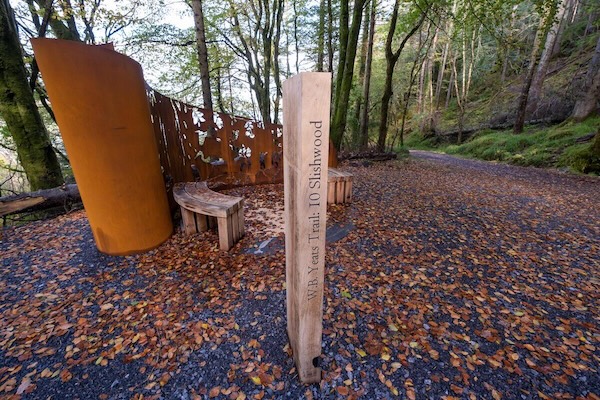
The Yeats Trail Sligo complements the Wild Atlantic Way and can be explored by car, bicycle, or on foot (depending on the stop).
How Long Does It Take to Complete the Yeats Trail?
If driving, one full day is sufficient, giving yourself the opportunity to stop briefly at each location.
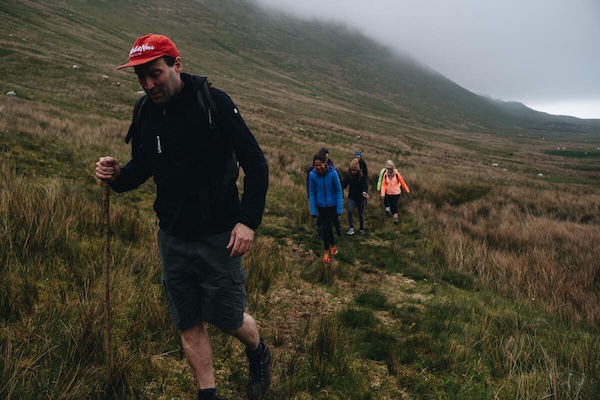
If hiking, I would suggest two days or more, especially if you want to include scenic walks into your itinerary.
Many visitors, however, incorporate the trail into a weeklong stay in Sligo.
Because several stops involve walking trails (Knocknarea, Benbulben Forest Walk, Dooney Rock, Hazelwood, etc.), allowing extra time enhances the experience.
Is the Yeats Trail Sligo Free?
Most locations along the Yeats Trail are free to visit, especially the natural sites and walking trails.
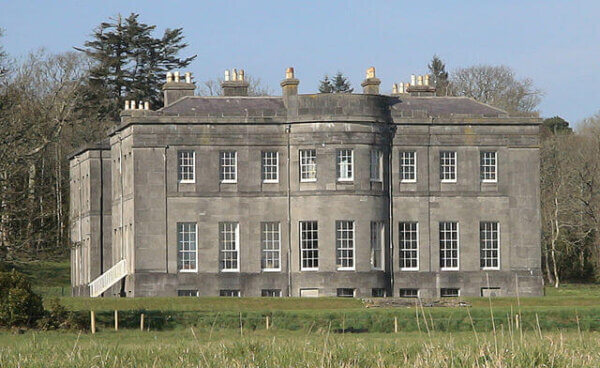
Some attractions, such as Lissadell House, have seasonal opening hours and an admission fee.
Stop #1: Knocknarea
What it is: A looped trail that starts at Knocknarea, a popular mountain for hikers and those curious about the Stone Age cairn on its peak.
The large mound is believed to cover the body of the warrior Queen Maeve, who features heavily in Irish mythology.
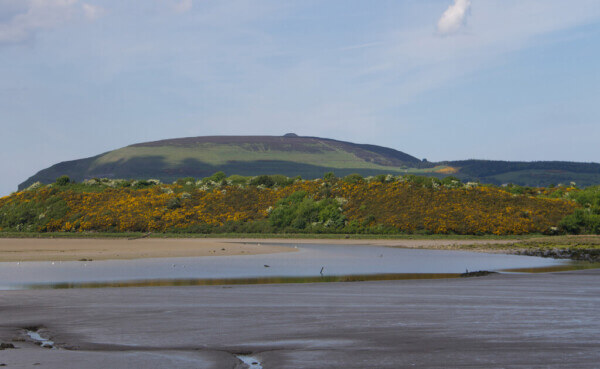
Why it mattered to Yeats: References to Knocknarea can be found in Yeats’s poetry, including in his poem, “Red Hanrahan’s Song About Ireland,” when he says: “The wind has bundled up the clouds high over Knocknarea, And thrown thunder on the stones for all that Maeve can say.”
The cairn is visible for miles around and speaks to Sligo’s rich archaeological history.
Researchers say this passage tomb, like ones found at the Carrowmore Megalithic Cemetery, was likely used for burials from the Stone Age period through the beginning of Christianity.
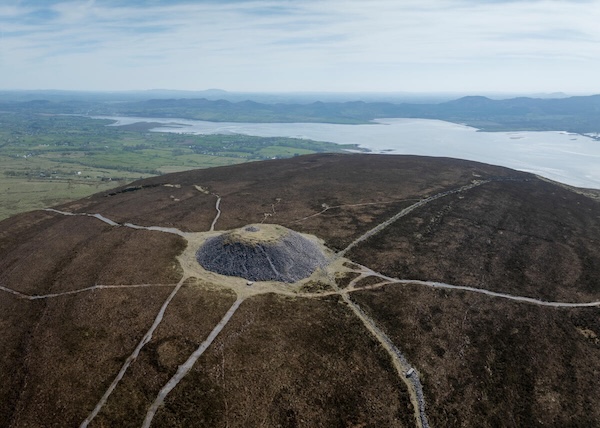
What visitors can expect: A moderately difficult hike, fabulous views at the top and an insight into Ireland’s ancient archaeology.
Stop #2: Rosses Point
What it is: an installation that is a tribute to Yeats and his family, which is located in the seaside village of Rosses Point.

Learn more about his brother Jack B, an accomplished painter; his sisters Susan (Lily), an embroider and Elizabeth (Lollie), a publisher; his father John B., also an artist, and his mother, who influenced his writings with her renditions of local folklore.
Why it mattered to Yeats: Rosses Point was near and dear to Yeats’s heart, as he spent many happy days along the shore with his cousins, recalling those happy times in his poem, “Reveries Over Childhood and Youth.”
What visitors can expect: In addition to the installation, why not try this walking route at Rosses Point, which offers views of Oyster Island and Coney Island?
Stop #3 Drumcliffe
What it is: Yeats’s grave. Even though he died in France in 1939, it was the poet’s wish to be laid to rest in his beloved County Sligo.
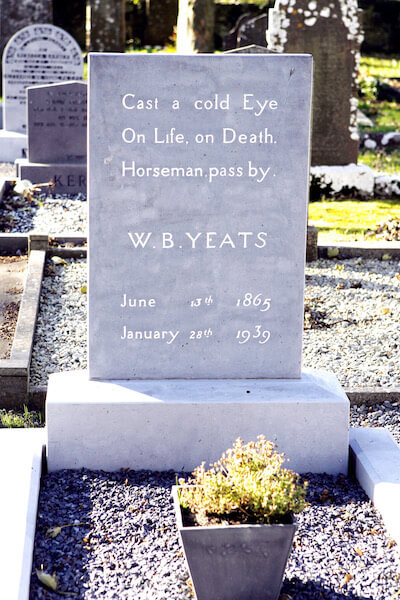
Why it mattered to Yeats: In addition to spending much of his youth in County Sligo, this cemetery is part of St. Columba’s Church of Ireland where his great-grandfather was once a rector.
What visitors can expect to see: A famous quote from his poem, “Under Ben Bulben,” can be found on the headstone: “Cast a cold eye on life, on death. Horseman, pass by.”
This installation is a poignant reminder of the poet’s vulnerability as he wrote the poem a year before his death.
Stop #4: Lissadell House
What it is: Yeats visited this local Sligo attraction as an adult, but some say he may have visited Lissadell House as a child, too.
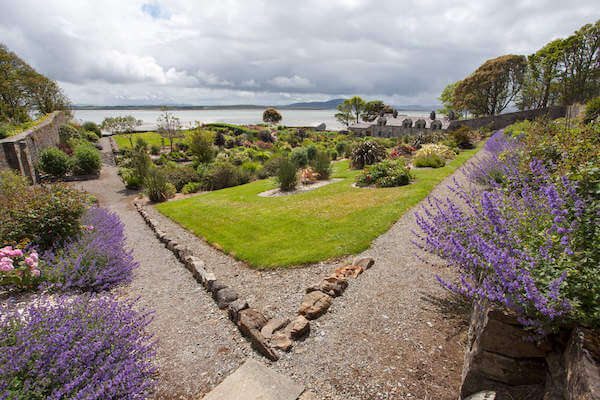
During his visits, he befriended Eva and Constance Gore-Booth, the daughters of Sir Robert Gore-Booth, who is known to have assisted many families in the local area during the Great Famine.
Constance would later become Countess Markievicz and play a pivotal role in the Easter Rising of 1916.
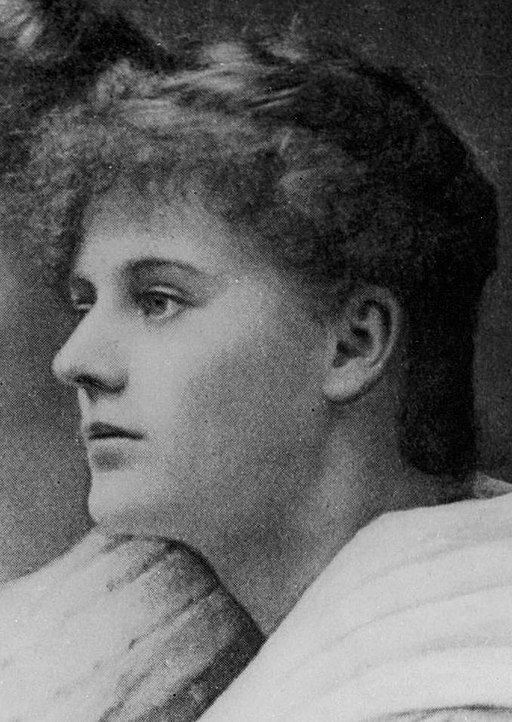
Why it mattered to Yeats: In The Winding Stair, a volume of poetry by Yeats, the sisters feature in one of its poems titled “In Memory of Eva Gore Booth and Con Markievicz.”
What visitors can expect: Take a guided tour and see exhibitions featuring Countess Markievicz and her sister Eva Gore-Booth, as well as a 1916 Rising display, presentations on the Yeats family, as well as the restored Victorian Walled Garden and Alpine Garden that overlook the Atlantic.
Stop #5: Benbulben
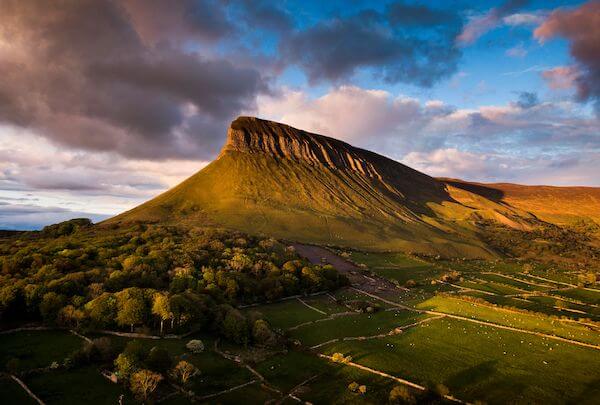
What it is: Benbulben is a table mountain that dominates the Sligo landscape. Its beauty and the mythology surrounding it greatly influenced Yeats, leading him to write the poem “Under Ben Bulben.”
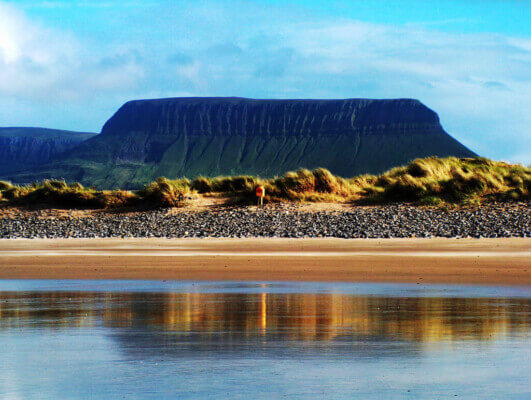
Why it mattered to Yeats: When he visited his grandparents’ house at Merville, Yeats had a perfect view of the unusually shaped limestone mountain, and over time, took an interest in the folklore that surrounds it.
By clicking on the Amazon link below, I may earn a small commission from the Amazon Associates Program, but only if you decide to buy something on the site. However, you will not incur any additional costs by doing so.
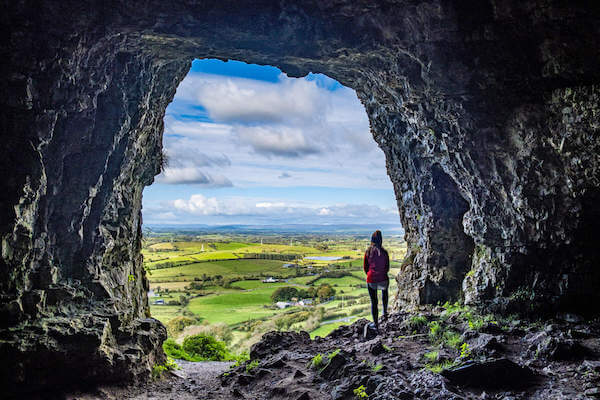
One story that fascinated him was the legend of the lovers Diarmuid and Gráinne, who sought refuge on the mountain while being pursued by Fionn McCool (Mac Cumhaill) and his warriors.
It also influenced his co-writing of the play “Diarmuid and Grania,” which was first performed at the Gaiety Theatre in October of 1901.
What visitors can expect: Be sure to take The Benbulben Forest Walk that will give you a good overview of this magnificent part of County Sligo or if you’re really adventurous, book a guided tour that will get you to the top of the mountain with Northwest Adventure Tours
Stop #6: Glencar Waterfall
What it is: A stunning 50-foot waterfall located near Glencar Lake in County Leitrim, just a couple of miles/kilometers from the Sligo border.
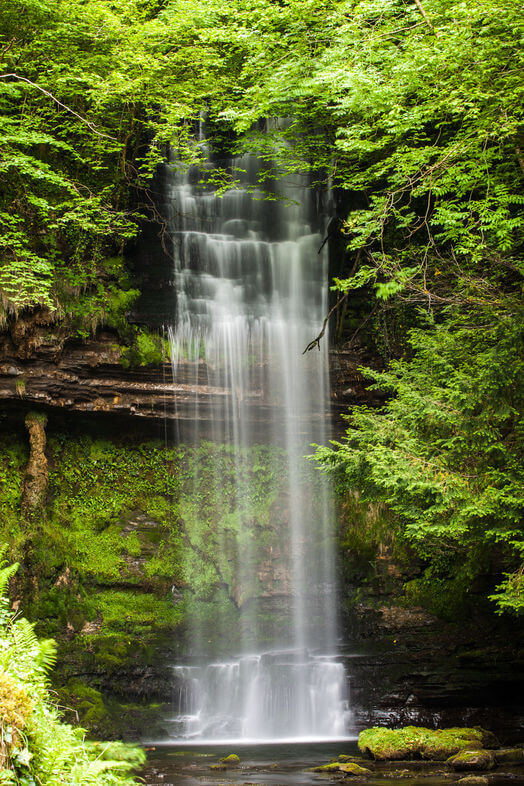
Why it mattered to Yeats: The waterfall features in “The Stolen Child,” which draws from stories that he heard from his mother about fairies taking children and replacing them with changelings.
What visitors can expect: Sligo Walks highlights three ways of getting to the falls that will take you through country roads and forest terrain.
Stop #7: Hazelwood
What it is: Located along the scenic shoreline of Lough Gill. Notable for its beautiful forest trails, quiet picnic areas and magnificent lakeside scenery.

Why it mattered to Yeats: The forest at Hazelwood is referred to by Yeats in his poem, “The Song of the Wandering Aenghus.” He liked spending time in nature and this place reflected his deep feelings for the landscape and the mystical qualities that he felt it resonated.
What visitors can expect: The nearby Hazelwood Estate is where you’ll find Hawk’s Rock Distillery. In addition, why not take the Hazelwood Loop that highlights the beauty of this area?
Get Wifi in Ireland with Wifi Candy – take 10% off with code IOB10
Stop #8: Deerpark
What it is: Deerpark forest is a beautiful forest that is close to Sligo town. Within the forest you’ll find the Maghernamush Court Tomb, which was erected around 3000 BC. It is considered one of Ireland’s finest cairns and is known locally as the “Giant’s Grave.”

Why it mattered to Yeats: Yeats was fascinated with the ancient world and this Neolithic structure inspired him to write the poem, “The Man Who Dreamed of Faeryland.”
What visitors can expect: Why not take The Deer Park Loop leading to the installation? Along the route, you’ll get great views of Lough Gill.
Stop #9: Innisfree
What it is: Innisfree is one of 20 islands on Lough Gill. It is situated very close to Parke’s Castle, which is in neighboring County Leitrim.
Why it mattered to Yeats: The poem, “The Lake Isle of Innisfree,” was written by Yeats while he was in London as he yearned for the peace and tranquility of County Sligo, away from the hurried city environment.
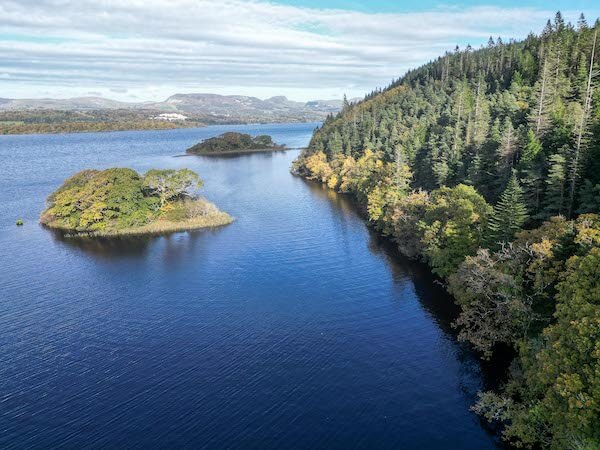
What visitors can expect: The picturesque lake is surrounded by woodlands. Why not explore the Slish Wood Loop, Dooney Rock, and other trails in the Hazelwood Forest?

Stop #10: Slish Wood
What it is: Slish Wood was once part of an ancient oak forest around Lough Gill. Today, there is a lovely lakeshore walking trail that runs through it.

Why it mattered to Yeats: Its mystical qualities and beauty appealed to Yeats, who mentioned the area in his poem, “In Reveries Over Childhood and Youth,” and in “The Stolen Child.”
In it, he imagined a child being lured away by fairies: “Come away, O human child! To the waters and the wild With a faery, hand in hand.”
What visitors can expect: A walk in this area of Sligo takes visitors along Lough Gill, into the forest and up to the surrounding hills.
Stop #11: Dooney Rock
What it is: Dooney Rock is located in Dooney Forest along the shores of Lough Gill.
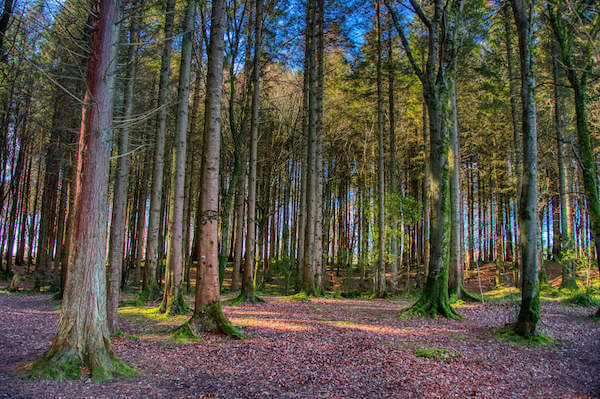
Why it matters to Yeats: He visited this place often as a young boy, and in his work, “The Fiddler of Dooney,” he emphasized the importance of fiddlers.
This is fitting given that Sligo is known for its unique fiddling style made famous by Michael Coleman and others.
What visitors can expect: Experience breathtaking views of Lough Gill and its islands on this trail, especially from the top of Dooney Rock.
Stop #12: Union Wood
What it is: Union Wood can be found between the villages of Collooney, Ballisodare and Ballygawley and is popular among walkers.

Why it mattered to Yeats: This area of Sligo is known for its mythological figures, including The Cailleach Berra (born as a mortal but known as a fairy woman). She features in his poem, “The Celtic Twilight.”
What visitors can expect: The installation at this trail stop includes a large inkwell hand carved from Kilkenny limestone and depicting two swans in water.
Stop #13: Ballisodare
What it is: A 10-minute drive from Sligo town.
Why it mattered to Yeats: It is where he visited his great uncle William Middleton at Avena House and it is also where the family flour mill was located.
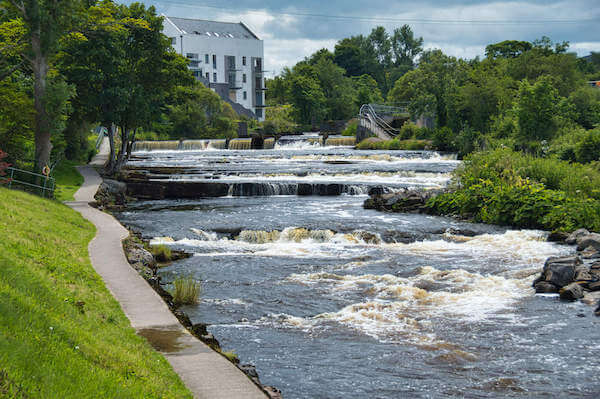
Based on his time in Ballisodare, Yeats wrote the poem, “Down by the Salley Gardens,” which was later put to music.
The poem was in reference to The Salley Gardens, a popular salmon fishing location in the town with impressive cascading waterfalls.
What visitors can expect: The Ballisodare Falls and scenic walking trails like the Union Wood walk.
Get an All Trails Plus Membership and a Free Trial
Stop #14: Glenwood Forest
What it is: Located beneath the Ox Mountains and overlooking Ballisodare Bay.

Why it mattered to Yeats: The region formed the basis for his play, “At the Hawk’s Well.”
What visitors can expect: This easy woodland walk will give you impressive views of Doomore Mountain, Sligo Bay and North Sligo.
Frequently Asked Questions About the Yeats Trail
Where does the Yeats Trail start?
The trail is not a strict loop and can be started at any point, though many visitors begin in or near Sligo Town.
Can you visit Yeats’s grave?
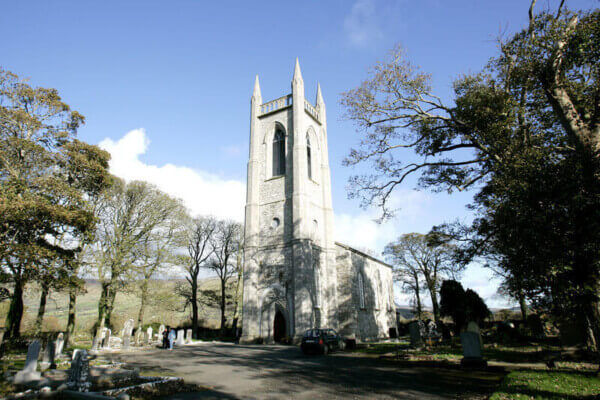
Yes. Yeats is buried in Drumcliffe Churchyard beneath Benbulben. It is located on the N15, about 8 km/5 miles outside the town.
Is the Yeats Trail suitable for families?
Yes. Many stops involve short scenic walks suitable for families, though hikes like Knocknarea are more challenging.
Is Innisfree accessible?
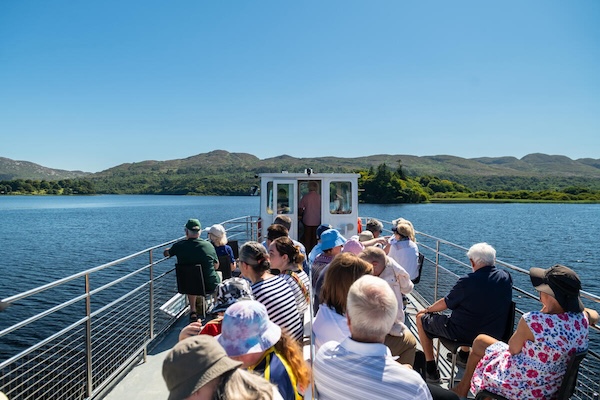
Innisfree is one of the islands on Lough Gill and can be viewed from the shore or visited by boat.