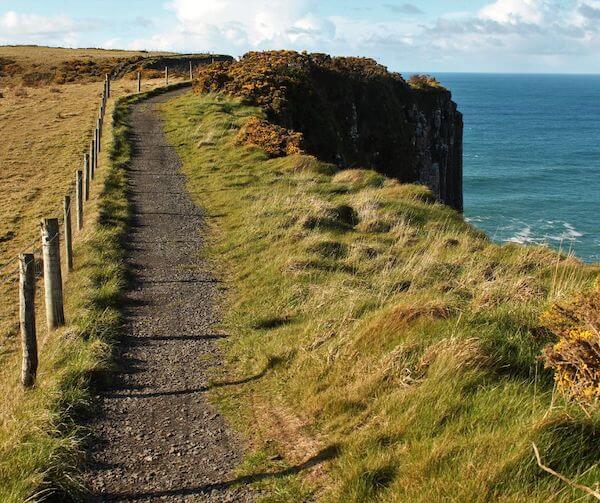
Updated October 2026--If you’re planning a trip along Northern Ireland’s Causeway Coast, don’t just drive the famous coastal route. Some of the best scenery is found when you get out of the car and explore on foot.
This post contains affiliate links, and I may earn compensation when you click on the links at no additional cost to you.
From the extraordinary rock formations at the Giant’s Causeway to secluded beaches, ruined castles and dramatic clifftop paths, there are plenty of opportunities to experience this spectacular part of County Antrim at a slower pace.
I’ve chosen five walks that showcase different sides of the Causeway Coast. Some are short and relatively easy, while others involve steep steps or exposed cliff paths, so I’ve included practical information to help you decide which ones are right for you.
Which Causeway Coast Walk is Best for You?
Best for First-time Visitors
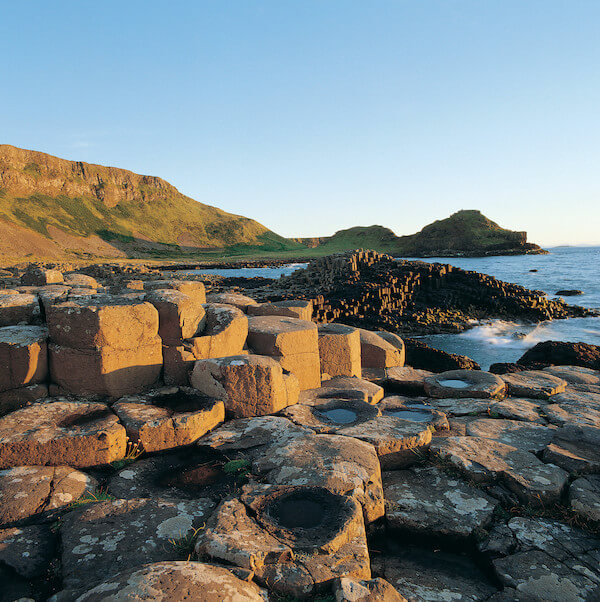
Giant’s Causeway.
Best for Castle Ruins
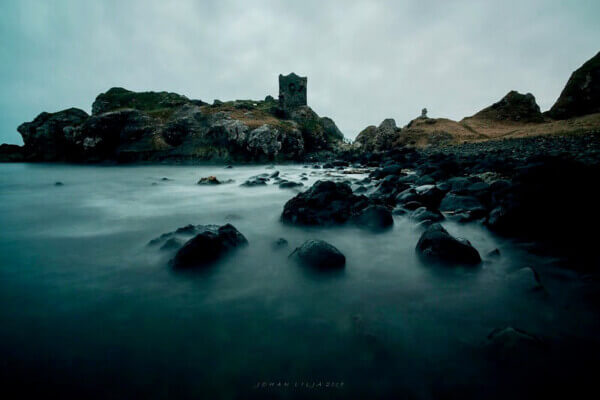
Kinbane Castle.
Best for a Beautiful Beach
White Park Bay
Best for Dramatic Coastal Views

Carrick-a-Rede.
Best for a Longer Coastal Hike
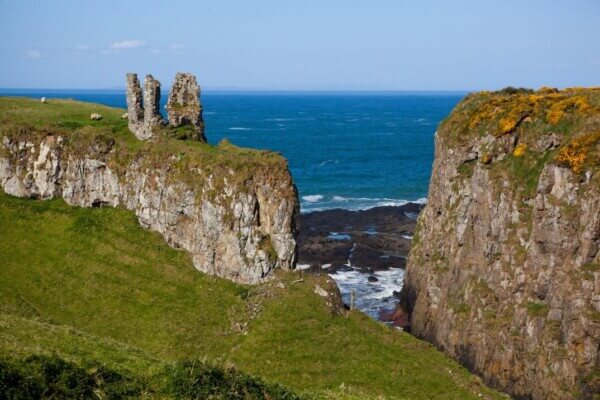
Dunseverick Castle to the Giant’s Causeway.
Best if You Don’t Want a Long Walk
Kinbane Castle.
1. Giant’s Causeway Walk
If this is your first visit to Northern Ireland, the Giant’s Causeway is probably already on your itinerary. But rather than simply walking down to the famous stones, consider giving yourself enough time to explore some of the surrounding trails.

The Giant’s Causeway is famous for its remarkable hexagonal basalt columns, created by volcanic activity around 60 million years ago. Along the way you’ll also encounter some of the features associated with the area’s fascinating folklore, including the Giant’s Boot and the Organ.
The National Trust currently offers four trails at the Giant’s Causeway: Blue, Green, Red and Yellow.
The Blue Trail provides the most direct route to the famous stones, while the Green and Red trails allow you to experience more of the surrounding landscape. The Yellow Trail follows a section of the Causeway Coast Way from Runkerry Head.
Which Giant’s Causeway Trail Should You Take?
If you’re short on time, The Blue Trail is the most direct option, at about 0.8 miles.
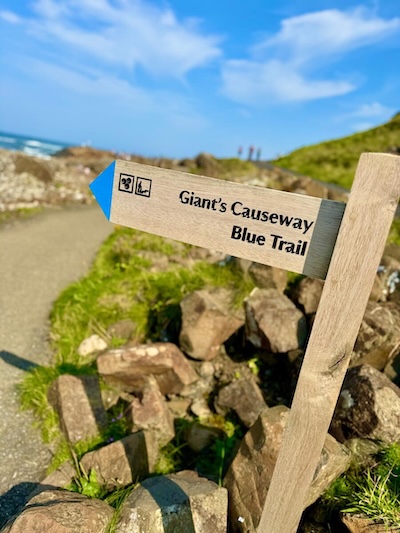
If you want a longer, more accessible walk, The Green Trail is about 2 miles and provides clifftop views of the Causeway, Scotland and the Inishowen Peninsula.
If you want more dramatic clifftop scenery, I’d consider the Red Trail.
Whichever route you choose, take care on the Causeway stones. They can become slippery when wet.
Why I Recommend It
The Giant’s Causeway is one of those places where photographs really don’t do it justice.
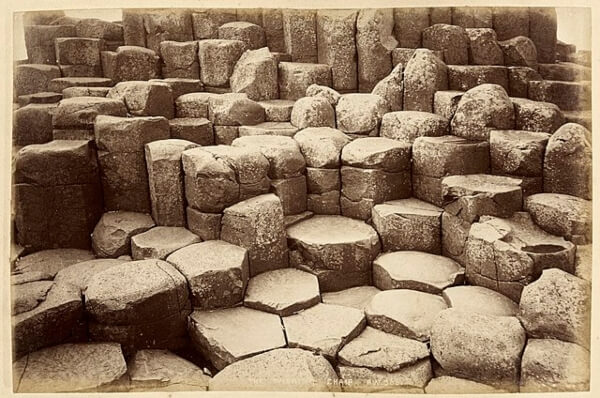
Walking among the enormous basalt columns and then looking back toward the cliffs gives you a much better appreciation of the landscape.
The area can be busy, particularly during the summer months. Arriving earlier in the day can make the experience more enjoyable.
Get Wifi in Ireland with WiFicandy – take 10% off with code IOB10
2. Kinbane Castle and Kinbane Head
If you’re looking for a quieter alternative to some of the Causeway Coast’s better-known attractions, put Kinbane Castle on your list.

The ruined 16th-century castle sits dramatically on a rocky headland overlooking the North Atlantic. The setting is spectacular, with views across the coastline and, on a clear day, toward Rathlin Island and Scotland.
The walk to the ruins is short, but don’t let the distance fool you. There are steep, narrow steps and uneven ground, so this isn’t a walk I’d recommend simply because it is short.
At a glance
Distance: About 0.6 miles /1 km
Time it takes to complete: 30-60 minutes
Type of Trail: Out and back
Difficulty: Moderate
Best for: Castle ruins and dramatic coastal views
Why I recommend It
Kinbane has a wonderfully atmospheric feel. It’s much less about checking off a long-distance hike and more about taking your time at a remarkable location.
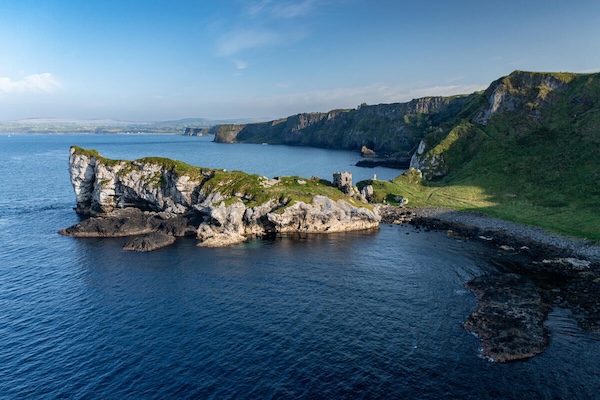
If the weather is wet or windy, take extra care. The exposed location and steep sections can make the walk more difficult.
By clicking on the Amazon link below, I may earn a small commission from the Amazon Associates Program, but only if you decide to buy something on the site. However, you will not incur any additional costs by doing so.
Tip: Wear shoes with good grip and don’t rush the descent.
3. White Park Bay Beach Walk
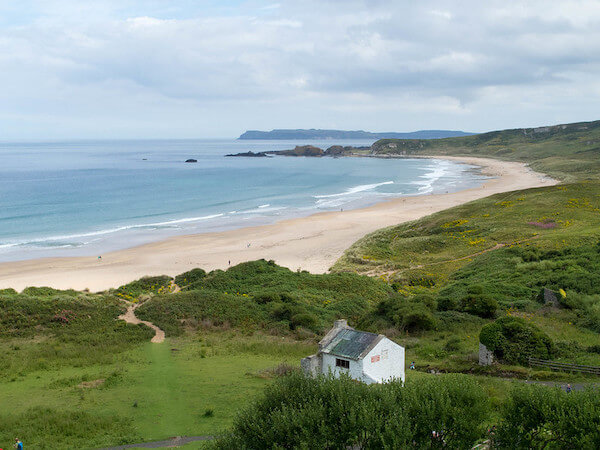
If you love beautiful beaches, don’t miss White Park Bay.
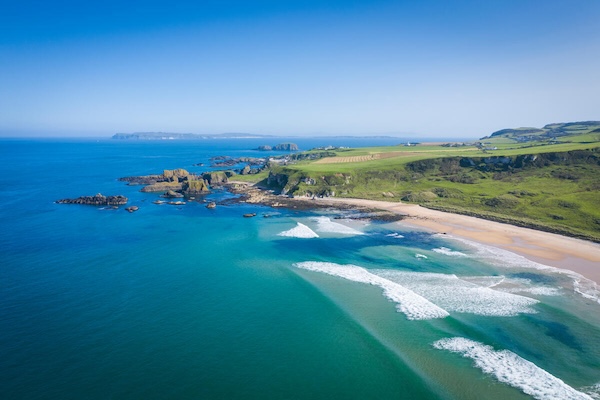
The beach forms a sweeping crescent between two headlands on the Causeway Coast, backed by dunes and grassland. It feels wonderfully wild and peaceful compared with some of the busier attractions nearby.
From the car park, a steep path leads down toward the beach. Once you’re on the sand, you can walk along the bay and return the same way.
At a Glance
Distance: About 1.4 miles /2.25 km
Time it takes to complete: 1-1.5 hours
Type of Trail: Out and back
Difficulty: Easy to moderate
Best for: Beach lovers, photography and a quieter coastal experience
Look Out for the Old Schoolhouse
Before heading down to the beach, keep an eye out for the small whitewashed building near the entrance. It was once associated with the Old Hedge School.
The beach and surrounding landscape are also a good place to look for wildlife and birdlife.
One important warning
Be careful around the tides at White Park Bay.
The beach is exposed to the Atlantic, so check conditions before setting off and don’t put yourself in a situation where the incoming tide could cut off your route.
4. Carrick-a-Rede Coastal Walk
The Carrick-a-Rede walk is one of the most spectacular short walks on the Causeway Coast.
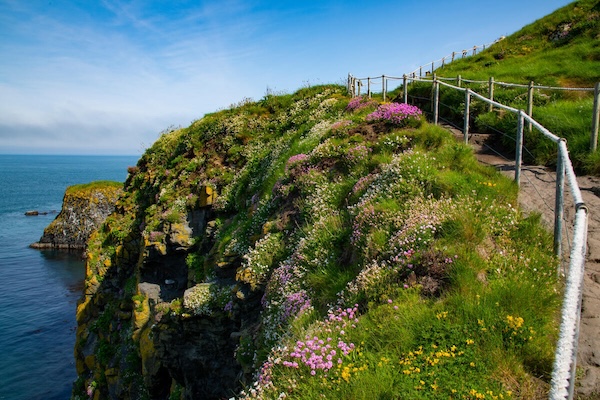
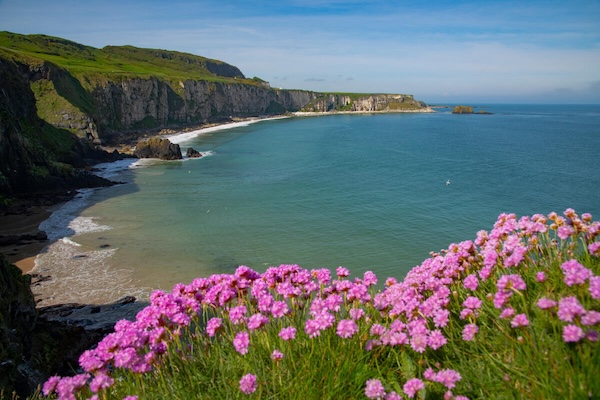
The route follows the coastline toward the famous Carrick-a-Rede Rope Bridge, with magnificent views across the Atlantic along the way. On clear days you may see Rathlin Island and the Scottish coast.
The rope bridge was originally used by salmon fishermen and today is one of Northern Ireland’s best-known attractions.
At a Glance
Distance: About 1 mile /1.6 km
Time it takes to complete: about 1 hour
Type of Trail: Out and back
Time: About 1 hour
Difficulty: Moderate
Best for: Dramatic coastal scenery and the famous rope bridge
The National Trust currently describes this as a moderate walk. There are steep ascents and descents, uneven sections and steps, including a steep staircase leading to the bridge. There are also unfenced cliff edges and the area can be very windy.
So while the distance is short, this isn’t one I’d describe as an easy stroll.
This is one of those walks where you should resist the temptation to hurry.
The coastline, cliffs, seabirds and views toward Rathlin Island are just as much a part of the experience as the bridge itself.
At a Glance
Total Length: 1.6 miles/2.57 km
Time it takes to complete: 45 minutes
Type of Trail: Out and back
Difficulty: Moderate
Best For: Dramatic coastal scenery and the famous rope bridge
Do you have to cross the rope bridge?
No. You can enjoy the coastal walk and views without crossing the bridge.
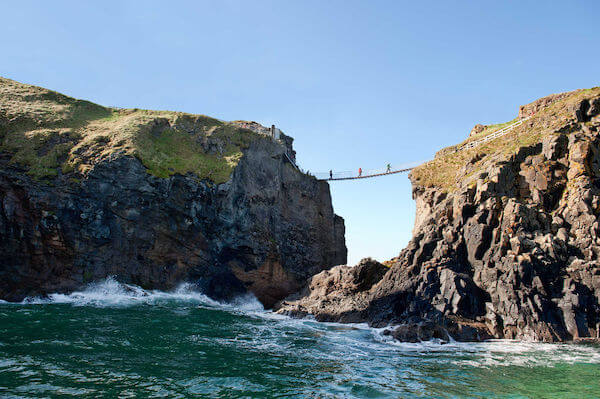
If you do want to cross it, you’ll need a ticket and should check current opening information before your visit. Dogs are welcome on the site on leads, but they cannot cross the bridge.
Take your time
This is one of those walks where you should resist the temptation to hurry.
The coastline, cliffs, seabirds and views toward Rathlin Island are just as much a part of the experience as the bridge itself.
5. Dunseverick Castle Coastal Trail to the Giant’s Causeway
If you have more time and want to experience the Causeway Coast on foot rather than simply stopping at individual attractions, this is the walk I’d choose.
The route begins near the ruins of Dunseverick Castle and follows the coastline toward the Giant’s Causeway.
There isn’t much left of the castle today, but its location is fascinating.
The site has a long history and is traditionally associated with St. Patrick and the ancient kings of Ulster.
Once you leave the castle behind, the scenery becomes the star of the show.
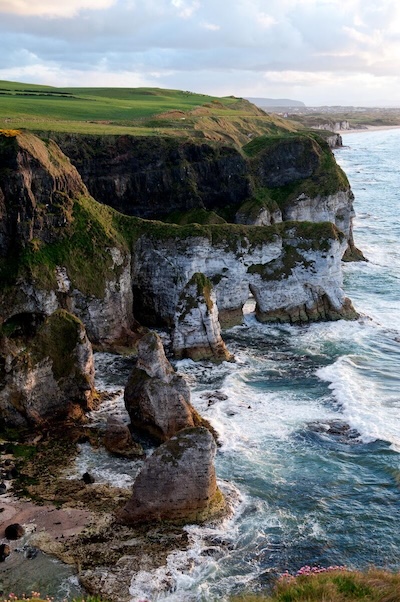
You’ll walk along open coastal paths with views of cliffs, headlands, bays and the Atlantic Ocean. Depending on the conditions, you may see grazing sheep and plenty of seabirds along the way.
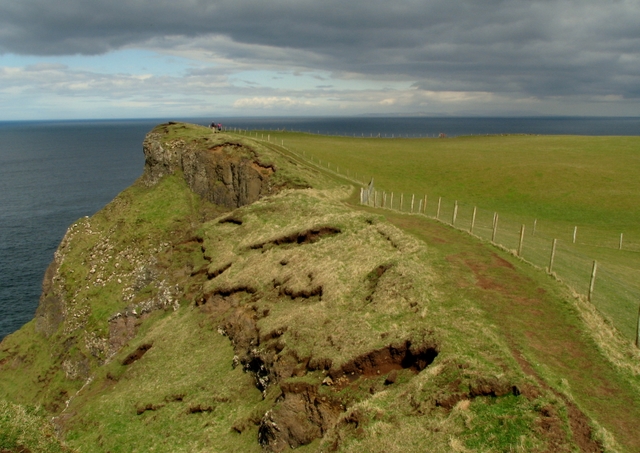
Some of the scenery you’ll encounter includes Port Moon, Portnabrock, Bengore Head and Benbane Head before you eventually approach the Giant’s Causeway.
And one of the best parts comes toward the end.
As you approach the Giant’s Causeway, you get increasingly impressive views of the cliffs and the World Heritage Site from above.
At a Glance
Distance: Approximately 5–5.5 miles (8–9 km)
Time it takes to complete: About 2¾–3 hours
Difficulty: Moderate
Type of Trail: One-way/linear walk
Best for: Experienced walkers and anyone wanting spectacular coastal scenery
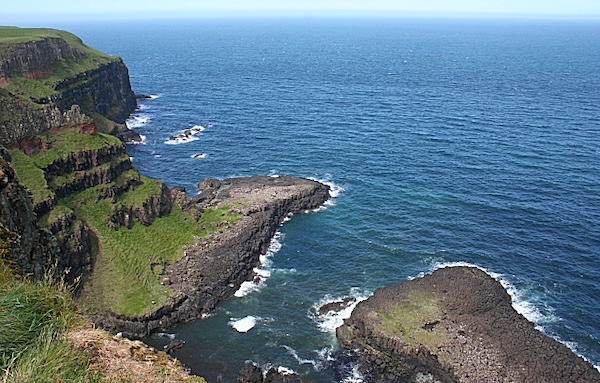
Allow extra time: The 2¾-hour estimate is walking time. You’ll almost certainly want to stop for photographs and to take in the scenery, particularly around Port Moon, Bengore Head and Benbane Head. I’d allow 3½–4 hours if you’re visiting at a leisurely pace.
A Little Planning is Required
Because this is a linear walk rather than a circular route, you’ll need to think about transportation.
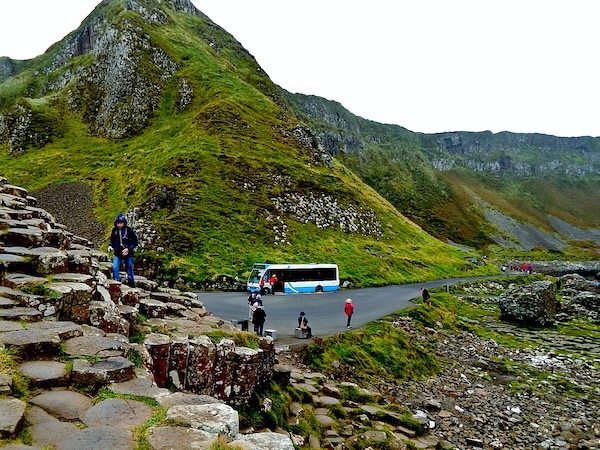
One option is to use public transportationpublic transportation to reach the starting point and then finish at the Giant’s Causeway.
Allow plenty of time for the walk. The coastal scenery is so good that you’ll probably want to stop frequently for photographs.
Important: This is an exposed coastal walk. Weather conditions can change quickly, so check the forecast and wear appropriate footwear and clothing.
What You Should Wear for Causeway Coast Walks
Even if you’re visiting during the summer, don’t assume the weather will stay warm and dry.
I’d recommend bringing: comfortable walking shoes or hiking shoes with good grip; a waterproof jacket; layers; water; sunscreen; a hat; a small backpack, and your phone or camera.
Some of these routes include exposed cliff paths, steep sections and uneven ground, so good footwear is particularly important.
And remember that short doesn’t necessarily mean easy on the Causeway Coast.
Are These Walks Suitable for Children?
Some are much more suitable for families than others.
The Giant’s Causeway has several trails, including the Green Trail, which the National Trust describes as an accessible clifftop trail.
White Park Bay can also be a lovely choice for families who simply want to enjoy a beach and some fresh air, although you’ll need to manage the steep path down to the beach.
I’d be more cautious about taking young children on the more exposed sections of Carrick-a-Rede or Kinbane Castle.
Carrick-a-Rede, in particular, has steep steps, uneven terrain and unfenced cliff edges.
If you’re traveling with children, choose your walk based on their age, confidence and walking ability rather than distance alone.
My Picks: Which Causeway Coast Walk Should You Do?
If you only have time for one, I’d choose the Giant’s Causeway.
It’s the area’s signature attraction and there are several trails to choose from.

If you’ve already visited the Giant’s Causeway and want something different, I’d choose tthe Dunseverick Castle trail to the Giant’s Causeway, because you’ll experience a much wilder side of the coastline.
For something shorter, Kinbane Castle packs spectacular scenery into a relatively short walk.
And if you love beaches, White Park Bay is difficult to beat.
The beauty of the Causeway Coast is that you don’t have to be an experienced hiker to enjoy it. You can choose a short walk, spend a few hours exploring, or make walking a bigger part of your Causeway Coast itinerary.
Planning a Causeway Coast Road Trip?
If you’re planning a road trip along the Causeway Coastal Route, be sure to allow enough time to get out of the car and experience the coastline on foot. Some of the best views are waiting just beyond the car park.
Are you planning to explore any of these 5 easy walks on the Causeway Coast? Let me know in the comments below.