
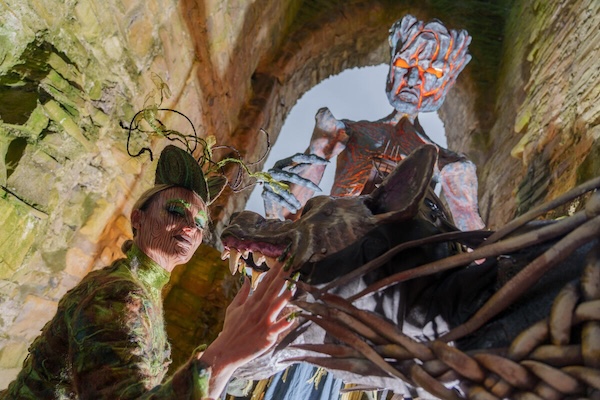
Updated August 2026–If you’re looking for a genuine way to celebrate Halloween, there’s no better place to experience it than in Ireland, where Halloween has deep rotes dating back to the ancient Gaelic festival known as Samhain.
This post contains affiliate links and I may earn compensation when you click on the links at no additional cost to you.
Samhain (pronounced “Sow-wen,” with the sow sounding like that used to describe a female pig) marked the end of the harvest and the beginning of winter. Many traditions associated with Halloween today can be traced, at least in part, to these ancient celebrations.
Today, Halloween in Ireland is more about the remembrance of those ancient customs, even though costumes and trick-or-treating are very much a part of it as well.
Across the island, you’ll find spectacular festivals, bonfires, parades, storytelling, traditional Irish foods on offer, ghost tours and an abundance of family-friendly events, all part of the celebration of Halloween .
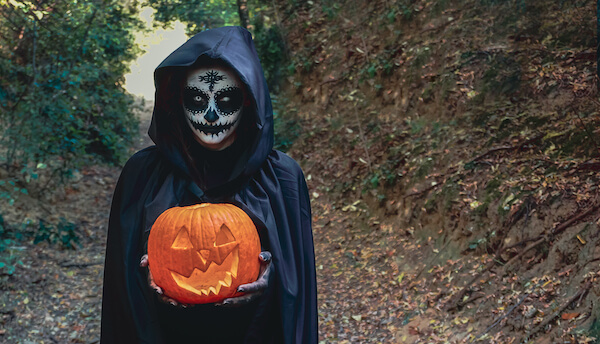
Some celebrations focus on Ireland’s ancient Samhain heritage, while others embrace the spooky side of Halloween with haunted attractions and plenty of thrills.
From the Púca Festival in County Meath, where visitors can experience Samhain traditions in the landscape where they originated, to the spectacular Derry Halloween celebrations, Ireland offers plenty of ways to experience Halloween.
Whether you’re planning a trip to Ireland in October or simply curious about the origins of Halloween, here’s where to find the best Halloween festivals, traditions and spooky experiences around the island.

- Book the best tours and guides on Tripadvisor, Viator or GetYourGuide
- Get reliable travel insurance with Travel Insurance Master
- Get the best flight tickets with Aviasales
- Rent a comfortable car via Discovercars
- Find the best accommodation on Booking.com
Why is Ireland Considered the Home of Halloween?
In Ireland, Samhain marked the end of the harvest and the beginning of winter. It was one of the four major seasonal festivals in the Gaelic calendar.
Samhain was also considered a time when the division between the living world and the supernatural world was especially thin.
According to traditional beliefs, spirits and otherworldly beings could cross into the human world around this time.
As a result, people in ancient Ireland lit fires, gathered for celebrations, and used disguises or costumes as part of the traditions that we now know are associated with this festival.
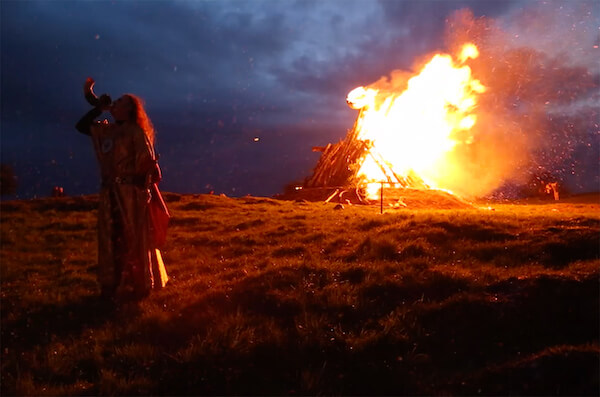
Over time, Samhain traditions became intertwined with Christian observances such as All Saints’ Day and All Hallows’ Eve. The evening before All Saints’ Day became known as All Hallows’ Eve, which eventually evolved into the word “Halloween.”
Irish and Scottish immigrants later brought many Halloween customs with them when they emigrated to North America, where the holiday developed into the celebration we know today.
Where Can You Find the Origins of Halloween in Ireland?
Some of the most fascinating places to explore Ireland’s Halloween heritage are in the Boyne Valley in County Meath.
This area of Ireland is one of the most important places to explore the ancient roots of Halloween.
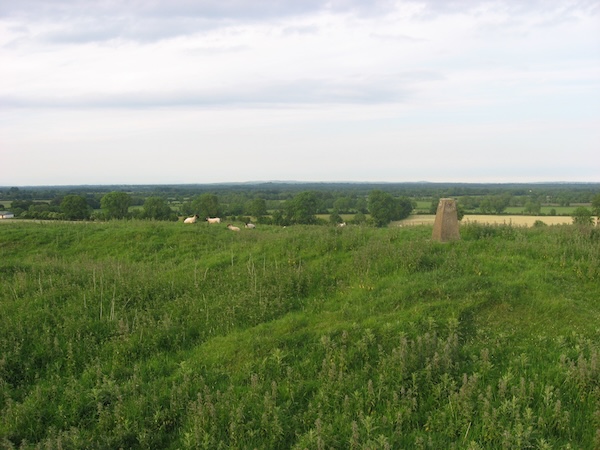
According to Irish folklore, Samhain was celebrated at the Hill of Tlachtga, now known as the Hill of Ward, near Athboy, more than 2,000 years ago.
The site is associated with an ancient Samhain fire festival and with the gathering of people for feasting and ceremonies at the beginning of winter. Archaeological research indicates that Tlachtga was indeed used for ceremonial activity and feasting from the Late Bronze Age through the early medieval period.
The Hill of Tara was one of Ireland’s most important ancient ceremonial and political sites, and Irish mythology associates it with gatherings and supernatural events at Samhain.
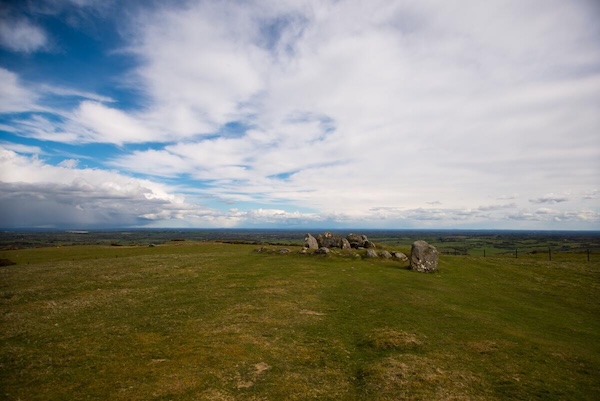
Other ancient monuments throughout the Boyne Valley that can be connected to Samhain include the Newgrange complex as well as the Loughcrew Cairns.
However, Rathcroghan in County Roscommon is one of the most under-rated places in Ireland to visit if you want to understand the ancient origins of Halloween.
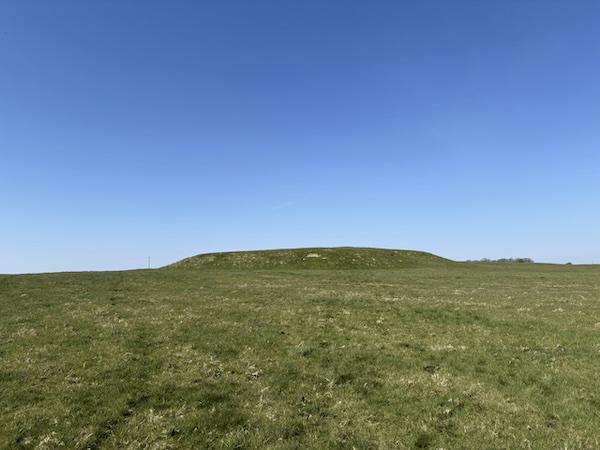
Known in early Irish literature as Cruachan Aí, Rathcroghan was the ancient royal site of Connacht and is a vast archaeological landscape containing around 240 identified archaeological sites.
The monuments span more than 5,500 years of Irish history, from the Neolithic period through to the medieval era.
But Rathcroghan’s connection to Halloween goes much deeper than its archaeology.
The site is strongly associated with Samhain.
According to experts at the Rathcroghan Visitor Centre, Samhain is particularly associated with Rathcroghan, and the landscape was believed to be a place where the boundary between this world and the Otherworld became easier to cross.
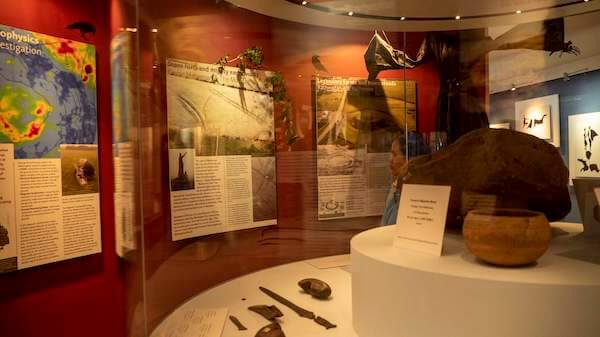
The complex includes Oweynagat (the Cave of the Cats), a cave traditionally connected with the Otherworld and supernatural beings.
It is sometimes described as Ireland’s “Gate to Hell.”
According to medieval Irish tradition, supernatural creatures emerged from Oweynagat at Samhain and caused destruction across the landscape as winter approached.
On a beam that spams the inner entrance to the cave, you’ll find Ogham inscriptions that some say bear a reference to Queen Maeve of Connacht.

The cave is also associated with the Mórrígan, the powerful figure from Irish mythology, and Rathcroghan features prominently in the Táin Bó Cúailnge, Ireland’s great epic, including stories of Maeve.
Visiting these places will give you a very different perspective on Halloween. Rather than thinking of Halloween as a modern holiday filled with costumes and candy, you can begin to understand the ancient Irish traditions, beliefs and seasonal celebrations that helped shape what it is today.
Traditional Irish Halloween Customs
Long before Halloween became associated with costumes, trick-or-treating and pumpkins, Oíche Shamhna (Halloween night) was an important date in the Irish calendar.
Many of the customs associated with October 31 have roots in Samhain.
Lighting Halloween Bonfires
Bonfires were an important part of traditional Halloween celebrations, particularly in rural Ireland. Communities gathered around large fires, where people socialized, played games and celebrated the arrival of winter.
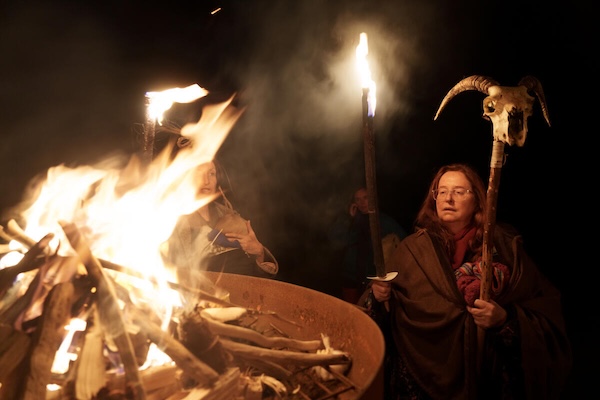
The tradition has particularly strong associations with County Meath and the Hill of Tlachtga (Hill of Ward), mentioned earlier, where archaeological evidence shows that ceremonial activity and feasting took place over thousands of years.
Carving Turnip Lanterns
Before pumpkins became popular, people in Ireland carved faces into large turnips or other root vegetables and placed candles inside them.
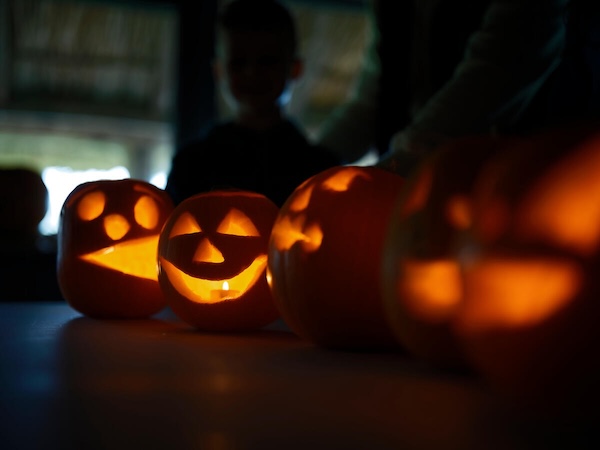
The lanterns were often placed outside people’s homes.
Some of the carved lanterns were deliberately designed to look frightening, adding to the spooky atmosphere of the night.
When Irish immigrants brought Halloween customs to North America, pumpkins, being much larger and easier to carve, eventually became the preferred vegetable for jack-o’-lanterns.
The Barmbrack
The Barmbrack (simply referred to in Ireland as a “brack”) is one of Ireland’s best-known Halloween foods.
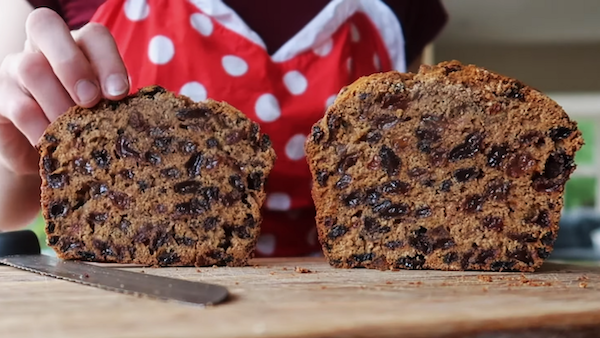
Long associated with Halloween, bakers often put several objects into the dough, including a ring, associated with marriage, or a piece of cloth, which was traditionally associated with poverty.
Different regions and households had their own variations.
Today, commercially produced barmbrack is widely available in Irish supermarkets, not just around Halloween, but throughout the year.
Playing Halloween Games
Halloween was traditionally a time for games and fortune-telling, particularly among young people.
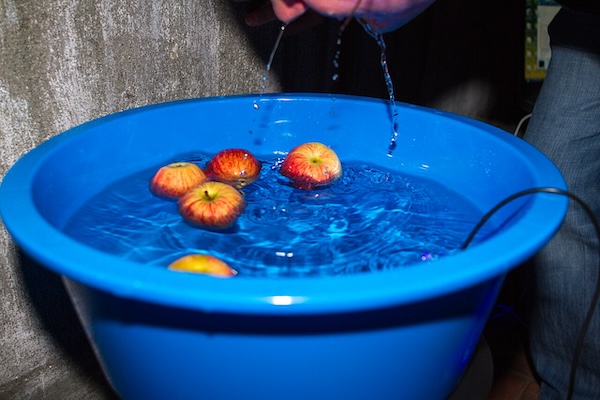
One of the best-known traditions involved apple bobbing, where participants tried to catch an apple floating in water using only their teeth. Apples could also be hung from strings and participants attempted to bite them without using their hands.
Other games involved nuts, candles and various forms of fortune-telling. Many of these activities were particularly popular with young people because Halloween was traditionally regarded as a time when the future could be revealed.
Fortune-Telling
The connection between Halloween and fortune-telling is one of the more intriguing Irish traditions.
Young people, particularly those interested in discovering who they might marry, took part in games and rituals intended to reveal their future.
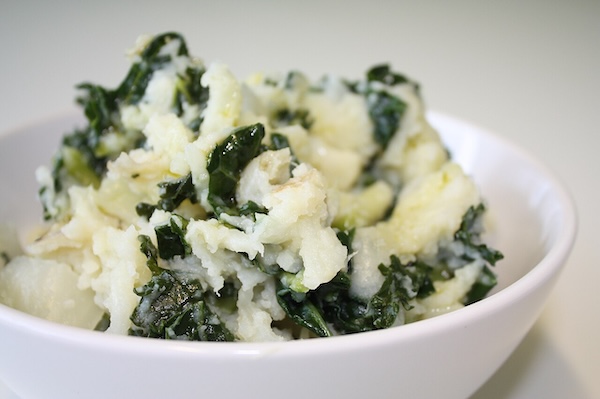
Colcannon, a mixture of mashed potatoes and cabbage, could be prepared with small objects hidden inside, while games involving apples, mirrors, nuts and candles were also used while fortune telling.
Irish Halloween Costumes
If you’re looking for an authentic Irish-inspired Halloween costume, you don’t necessarily need to reach for a green-and-orange outfit.
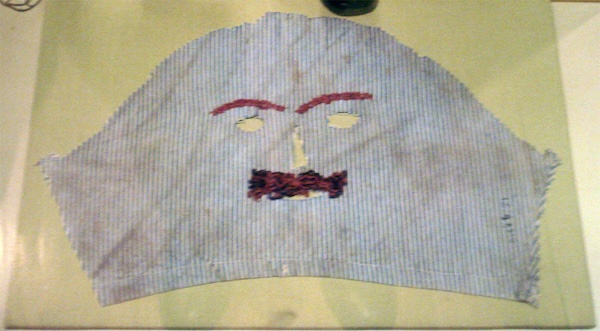
The clothing that was worn for Halloween in Ireland was much more about disguise, masks and mischief, with people creating garments from whatever materials that were available.
The goal was to make themselves look strange, frightening or unrecognizable.
The National Museum of Ireland Country Life outside Castlebar in County Mayo has examples of traditional Halloween masks as part of its National Folklife Collection.
Guising and Halloween Mischief
The Irish tradition of guising has similarities to modern trick-or-treating.
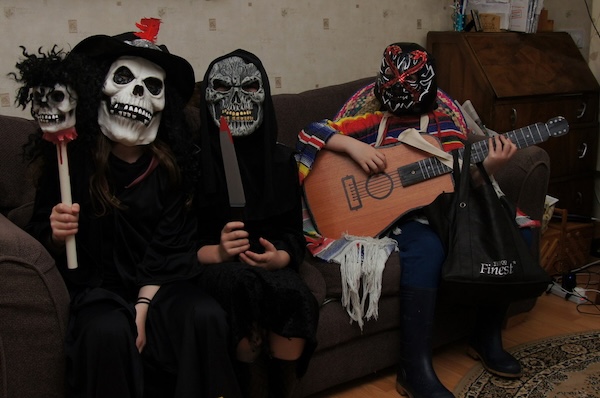
Groups of children and adults would disguise themselves and go from house to house, where they might sing, tell stories, perform a trick or provide some form of entertainment in exchange for food or treats, and in later years, for money.
They also went around disguised to both frighten and entertain their neighbors, helping establish some of the customs that eventually evolved into the modern-day Halloween celebrations that we are familiar with.
The Connection Between Samhain and Halloween
While the practices of ancient Samhain are different from how Halloween is celebrated today, there is a connection to today’s celebrations as fire, food, games, and storytelling are very much a part of Ireland’s popular Halloween festivals, several of which are detailed below.
The Púca Festival, County Meath (Oct. 29-Nov. 1)
There’s probably no better place to celebrate Halloween than in Ireland’s Boyne Valley region, where Samhain was once celebrated with grand fires and feasts.
This 4-day festival is a popular annual celebration of Halloween that draws locals and international visitors and is based on the legend of the púca, a shape-shifting creature from Celtic folklore and a familiar character in the Irish Halloween story.

The festival will include, as usual, a number of free and ticketed events, all focused on “music, myth, food, folklore, fire, feasting and merriment.”
This year’s theme is called “Between Worlds,” which celebrates the threshold of Samhain when the modern world quiets down and the former mystical traditions come alive.
All of the events are centered around the towns of Trim and Athboy.

Highlights of this year’s festival include the Púca procession, the traditional lighting of the Samhain fire, light projections on Trim Castle, and The Pyro Collective, all free events.
The Samhain Circus is another distinctive experience that is way different to a traditional circus that you might be familiar with.
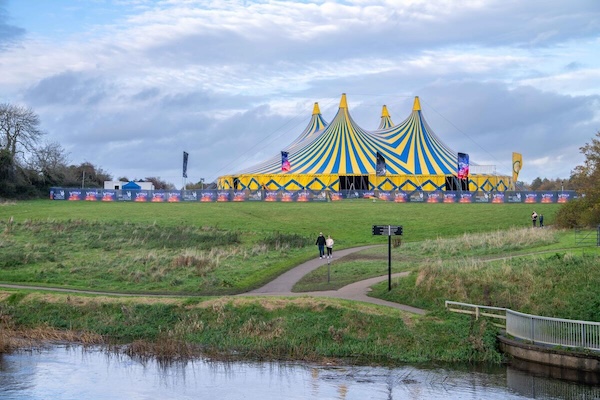
Held in Athboy, it includes a theatrical performance that highlights the darker, more mischievous side of Halloween.
Púca’s Samhain Circus is an adults-only experience, while the festival as a whole includes events suitable for families and free public events such as the Púca Procession and Samhain Fire.
There’s a lot to entertain everyone at this hugely popular Halloween event that will also include fire displays, a harvest market, workshops, games, and more.
A schedule of events can be found on the Púca Festival website.
Derry Halloween Festival (Oct. 28-Nov. 1) Celebrates its 40th Anniversary
If you want to experience Halloween on a truly spectacular scale, put the Derry Halloween Festival in Northern Ireland on your list.
The historic walled city comes alive with ghosts, ghouls, mythical creatures, performers and thousands of costumed visitors during one of the biggest Halloween celebrations in Europe.
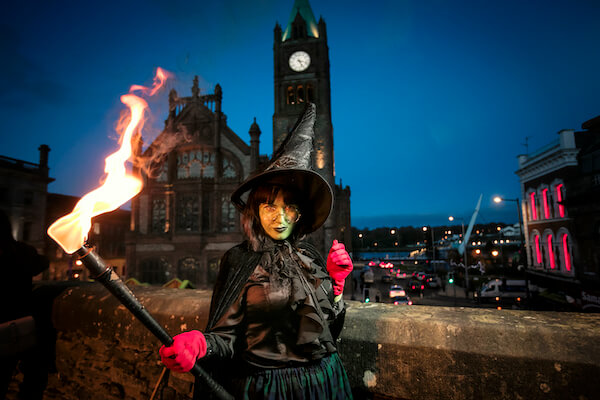
This year is particularly special because festival organizers are celebrating its 40th anniversary, taking place from Oct. 28th through Nov. 1st.
What began as a local fancy-dress event has grown into an internationally recognized festival that attracts tens of thousands of visitors each year.
The festival combines the ancient traditions of Samhain with modern Halloween entertainment, making it different from the Púca Festival mentioned above.
Derry’s historic walls also provide a dramatic backdrop for spectacular light installations, theatrical performances, acrobatics, music and street entertainment.

One of the highlights of the festival each year is the Awakening the Walled City Trail, where visitors can explore the atmospheric streets and historic walls after dark over three nights, while encountering illuminated installations, performers and mythical characters along the way.
There are also family-friendly events, tours, trails and entertainment for younger visitors. If you’re traveling with kids, you might want to bring them to Little Horrors, where they can celebrate with some arts and crafts Halloween style.
The festival reaches its climax with the famous Halloween Carnival Parade, when thousands of costumed revelers fill the streets before the evening ends with a spectacular fireworks display over the River Foyle.
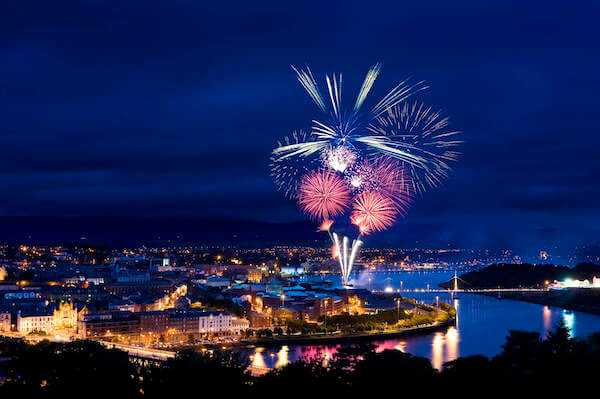
You’ll find a full schedule of festival events here.
Is Derry Halloween suitable for families?
Yes. Although there are plenty of spooky and frightening elements to the festival, Derry Halloween isn’t just for adults.
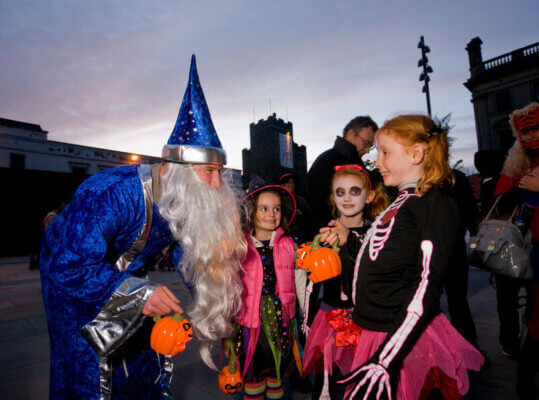
If you’re traveling with children, check the individual event descriptions before booking, as some of the evening entertainment and haunted attractions are intended for older visitors.
Why visit Derry for Halloween?
Derry offers something different from the more history-focused Púca Festival in County Meath.
Púca places greater emphasis on the ancient origins of Samhain, while Derry combines that heritage with a huge contemporary celebration featuring costumes, street performances, music, fireworks and a spectacular carnival atmosphere.
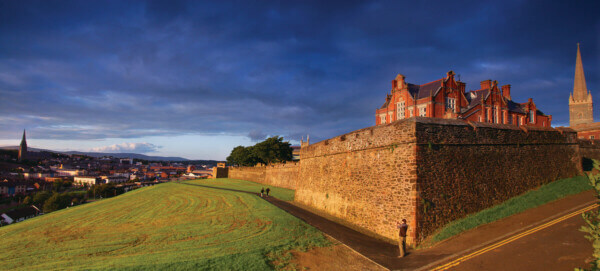
You don’t have to spend your entire visit at the festival.
Derry’s historic walls, museums, architecture and lively food and music scene make it worth adding a few extra days to your itinerary.
Tip: Accommodation can become difficult to find during the Halloween celebrations, so book well ahead if you plan to visit.
The Bram Stoker Festival, Dublin (Oct. 23-26)
The popular Bram Stoker Festival returns to Dublin in 2026 from Oct. 23rd through the 26th for four days and nights of “deadly adventures,” with events for both gothic enthusiasts and families.
The celebration pays homage to Bram Stoker, the Dubliner who created the novel “Dracula,” which was first published in 1897, and draws inspiration from Stoker, his life and work, all the while celebrating the Gothic, the supernatural, the after-dark and what Dublin might have been like during the Victorian era.
The festival also explores the darker side of Irish history, mythology and folklore, making it a good choice if you’re interested in the stories behind Ireland’s supernatural traditions.
Previous programs have included haunted walking tours of Dublin’s dark side, specifically sites most closely associated with Stoker, including Marsh’s Library, Trinity College, and Dublin Castle, as well as explorations of Irish mythology, Gothic performances, horror films, live music and family-friendly events, making this Dublin Halloween-related festival a good all-round multidisciplinary arts event.
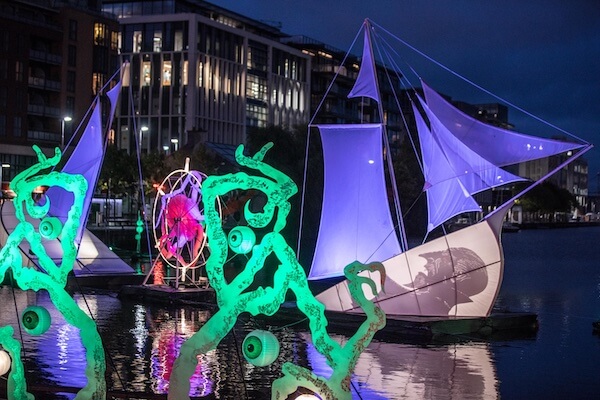
Tip: The 2026 program is due to be announced in late September, so check the official festival website before planning specific events.
Some events sell out, while others are free or family-friendly.
Macnas Halloween Parade, Galway (Oct. 25)
If you’re looking for one of Ireland’s most spectacular Halloween experiences, don’t miss the Macnas Halloween Parade in Galway, part of Galway City’s “Gaillimh Ah-Boo! initiative.
This isn’t your typical Halloween parade.
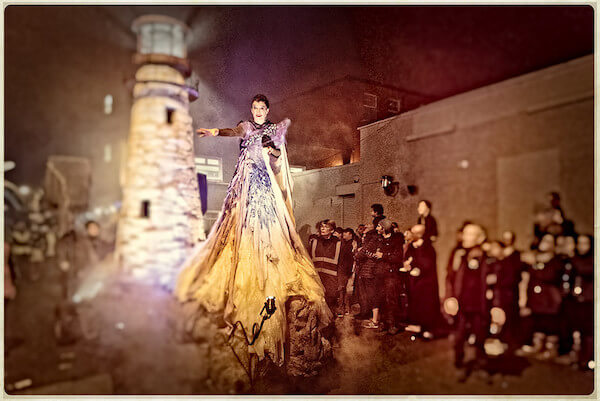
Macnas is Galway’s renowned performance and spectacle company, with parades that transform the city streets with enormous puppets, elaborate costumes, music, fire and theatrical performances inspired by mythology, folklore and the imagination.
Each year, Macnas comes up with a different theme, and on this, the company’s 40th anniversary, the theme of its 2026 parade is “Fiáin” (pronounced Fee-awn).
“Fiáin” is meant to be a celebration of the wild elements of the West of Ireland and according to the company organizers, it also reflects “the wild inspirations that have imbued our work over the last 40 years, and the wild energy that engulfs the streets, performers and audiences as we own the streets and public spaces for one night only.”
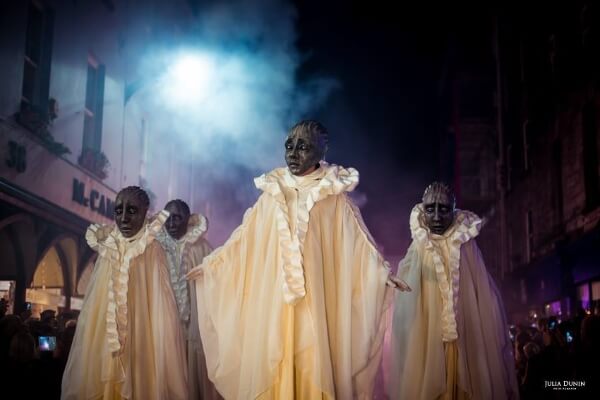
The Oct. 25th event (still to be confirmed, however) is expected to begin at 5:30 p.m., with the parade as usual making its way through Galway city, bringing thousands of spectators onto the streets for a dramatic evening of outdoor theater and spectacle.
Macnas’ performances often draw on Ireland’s rich tradition of mythology, folklore and storytelling. Rather than simply focusing on ghosts and monsters, the parade creates an imaginative world of larger-than-life characters and creatures.
If you’re in Ireland during this time, I’d absolutely put Galway on my itinerary as the city celebrates Halloween in a big way.
What Makes the Macnas Parade Special?
The scale of the spectacle is what sets Macnas apart.
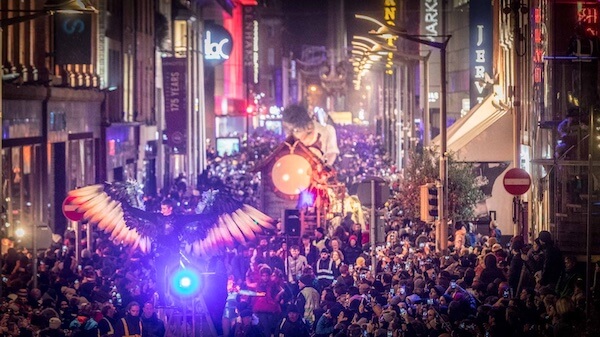
Giant puppets and fantastical figures move through the city accompanied by performers, musicians and dramatic visual effects.
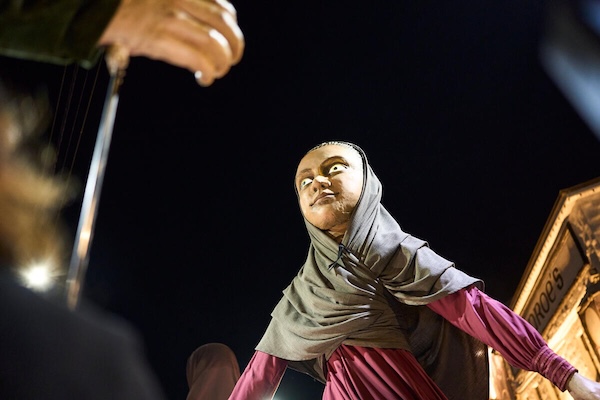
It is truly an immersive experience rather than something you simply watch from the sidelines.
The parade is free to attend.
Shop for Halloween Products on Etsy
Halloween in Limerick: Samhain, Folklore and Fire
Limerick offers a different way to experience Halloween in Ireland, combining the ancient traditions of Samhain with contemporary theater performances, storytelling sessions, fire performances and family-friendly events.
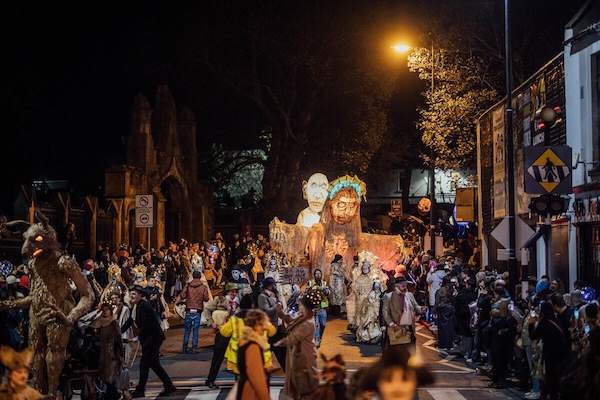
In 2025, the city was one of Fáilte Ireland’s Home of Halloween destination hubs, with an array of Halloween events on offer throughout the month of October.
On Oct. 22, Limerick will kick off its Hallowe’en Festival.
One of last year’s highlights was the Lumen Street Theatre’s Fire and Shadows Procession, with illuminated supernatural figures, mythological characters and theatrical fire performances filling the city’s medieval streets.
While no formal schedule has been released yet, expect storytelling, folklore talks, theatrical performances, Halloween trails and other family activities.
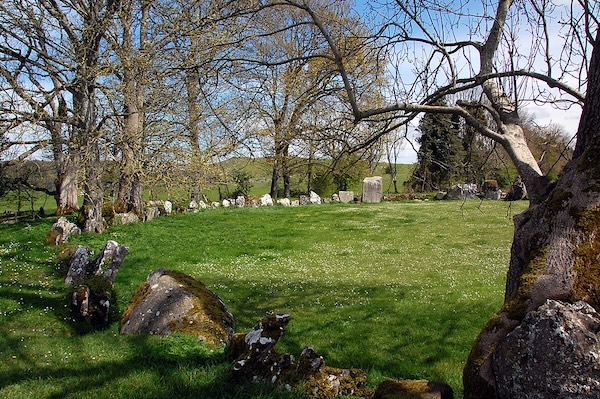
The nearby Lough Gur, an area rich in prehistoric archaeology, will also feature Halloween-themed events.
Halloween in Longford: Dead of Night Festival
If you’re looking for a Halloween experience that combines Irish folklore, mythology, fire and storytelling, County Longford in Ireland’s Midlands region is worth considering.
This year, Longford is part of the Ireland: Home of Halloween program, alongside neighboring County Westmeath, with a regional initiative known as Samhain in the Heartlands.

The centerpiece of Longford’s Halloween celebrations is the Dead of Night Festival, a county-wide celebration that includes live performances, interactive experiences, themed attractions and storytelling.
One of the main highlights is the Fire & Shadows Procession in Longford Town.
The spectacular Halloween-night procession is expected to feature fire dancers, drummers, giant puppets, mythical creatures and other performers.
You might also find lantern and mask-making workshops, storytelling sessions, harvest celebrations, walking tours, spooky drives, family activities and live music.
I would check out this list of events on the Longford tourism website.
What Else Can you Experience in Longford Around Halloween?
The Halloween program extends beyond Longford Town.
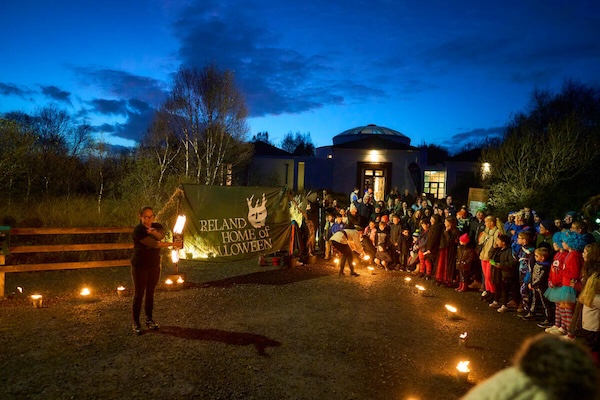
One notable event taking place at the Corlea Iron Age Roadway and Trackway Visitor Centre is the annual Féile na Samhna celebrations.
Oher Halloween events include the Samhain Trail and the Spooktacular Summoning at Dún na Sí, a new Samhain procession in Athlone that includes a range of food, storytelling, cultural and heritage experiences.
If you’re traveling through Ireland in late October, Longford could be an interesting stop for experiencing a more distinctly Irish side of Halloween, especially if you’re interested in Samhain, folklore and storytelling rather than simply haunted attractions.
Kilkenny Halloween/Samhain Events
Kilkenny is not only one of the most popular cities in Ireland for tourists but also an atmospheric place to experience Halloween given its medieval streets and tales of witchcraft and dark history.
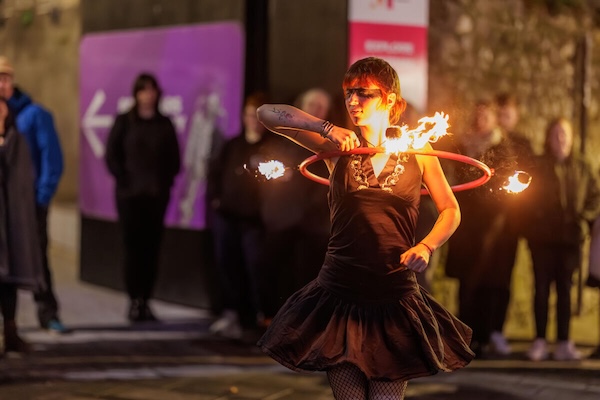
Kilkenny is also one of the destinations included in Ireland’s Home of Halloween initiative, with events taking place throughout the month.
The celebrations, known as “Fire, Feast and Folklore,” will include storytelling sessions, fire performances, family activities, food, and plenty of opportunities to explore the city’s darker side.
One of the highlights in Kilkenny this year will be a new outdoor show that will include The Cailleach, a Macnas creation.
In Gaelic mythology and folklore, the Cailleach is a powerful female associated with winter, wild landscapes and the changing seasons.
The date for the show has not been released but expect a spectacle similar to that in Galway’s Halloween celebrations.
Savour Kilkenny, the city’s popular October food festival, is another great reason to visit Kilkenny around this time.

The festival, scheduled to take place between Oct. 22nd and 26th, will include food markets, cookery demonstrations, family entertainment and other events around Kilkenny Castle.
Check out Ghost Hunting Equipment from Spirit Shack
More Halloween Events in Ireland in 2026
Best for Families
Causey Farm, County Meath; Oct. 17-Oct. 31 (weekends only): A family-friendly Halloween experience where kids can go pumpkin picking and engage in traditional Irish Halloween activities, like storytelling and plenty of seasonal fun. Tickets are already on sale.
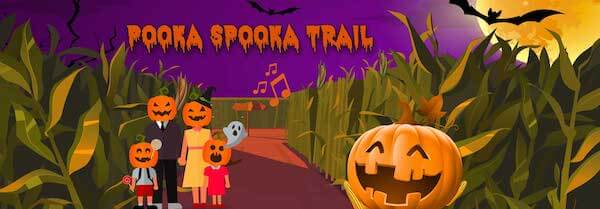
Lullymore Heritage & Discovery Park, County Kildare; Oct. 24-Nov. 1: Expect lots of ghastly ghouls and terrifying treats at this popular heritage park. Attractions include its Haunted Holograms, Terror Train Trips, Terror Treasure Hunts and freaky fun in the devilish den of play, known as the Funky Forest.
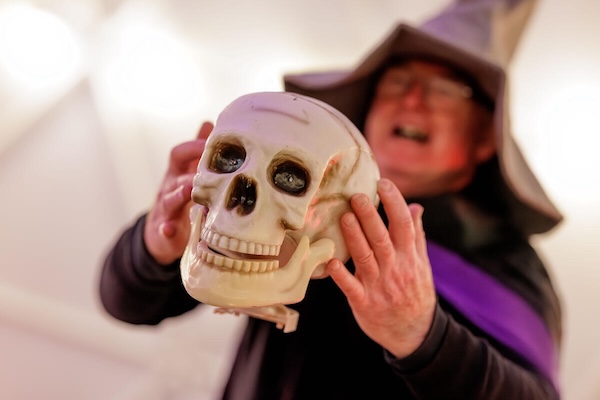
Castlecomer Discovery Park, County Kilkenny; this park provides a range of Halloween fun for kids, but there is nothing currently listed on its website.
Jurassic Newpark, County Kilkenny; Oct. 24-Nov. 1: Two Halloween events are on offer at this great park for kids. Jurassic Haunt is its action-packed daytime experience while The Witching Hour is its brand-new after-dark Halloween experience that will take place on Oct. 30th and 31st. Tickets are currently on sale.
Spike Island, Cork Harbour, County Cork; Kids can go on the Spookfest Trail, which includes the ferry ride to the island, a Halloween-themed quiz trail, trick-or-treating and Halloween decorations throughout the historic fortress and prison. Suitable for children aged 2+. The 2026 dates have not yet been announced, so check the Spike Island website before planning your visit.
Best for a Scare
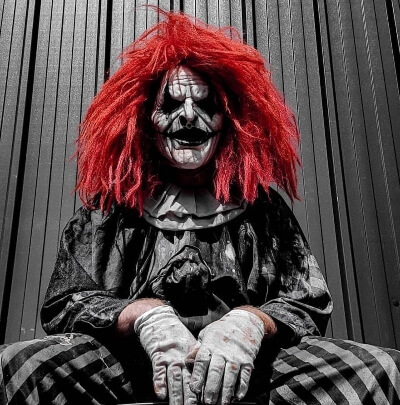
Spike Island, Cork Harbour, County Cork; year-round “Haunted Spike” tours: a genuinely atmospheric tour that you can take anytime during the evening hours on the infamous prison island. Guides share local folklore and paranormal stories as you explore the abandoned cells. Strictly for 16 and over.
Ghostbus Tour, Dublin: a theatrical two-hour bus tour combining Dublin’s dark history, ghost stories, comedy and special effects. It includes stops at spooky historic locations and is currently aimed at ages 14 and over.
The Haunted History Tour of Dublin, Dublin: a 1 and a 1/2-hour walking tour of the city that uncovers the macabre and gruesome aspects of Dublin’s history.
Best for History and Folklore
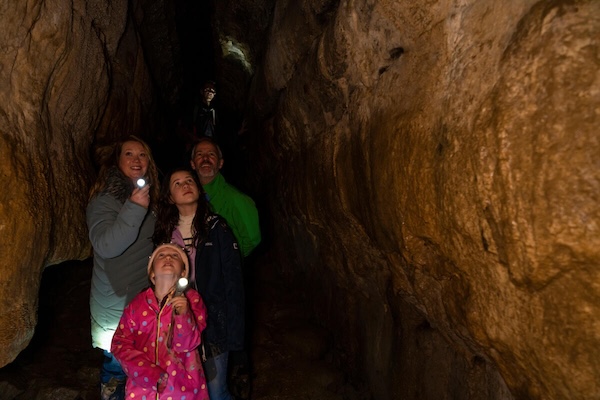
St. Michan’s Crypts, Dublin: explore the underground vaults of one of Dublin’s oldest churches on a guided tour that delves into the city’s fascinating and sometimes macabre history. The crypts contain historic coffins and naturally preserved remains, making this an atmospheric stop for anyone interested in Dublin’s darker past. The tour involves steep stairs and confined spaces. Offered on Mondays, Tuesdays, Wednesdays, and Thursdays weekly. Email [email protected]
Rathcroghan, County Roscommon: Oct. 21-Nov. 1: Take the Origins of Samhain Tour, a daily tour to Oweynagat (the Cave of the Cats), which is believed to be the birthplace of Samhain and the home of Halloween. Other guided tours can be booked at the visitor center year-round.
Best for Samhain & Irish Traditions
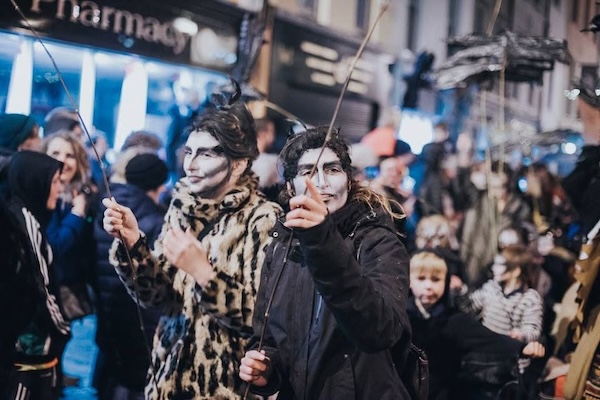
Clonakilty Samhain Festival, County Cork; dates not made available yet. Enjoy this traditional community festival celebrating Irish culture, music, folklore and myth, culminating in its Samhain Parade.
Can You Celebrate Halloween in Ireland on a Budget?
You don’t have to spend a fortune to experience Halloween in Ireland. In fact, some of the most memorable Halloween experiences are free or inexpensive, particularly if you’re interested in Ireland’s Samhain traditions, folklore and historic sites.
I would keep the following in mind if you’re visiting Ireland toward the end of October.
Look for Free Halloween Events
Many towns and cities across Ireland host free Halloween events, including parades, street performances, storytelling, community celebrations, fire shows and outdoor entertainment.
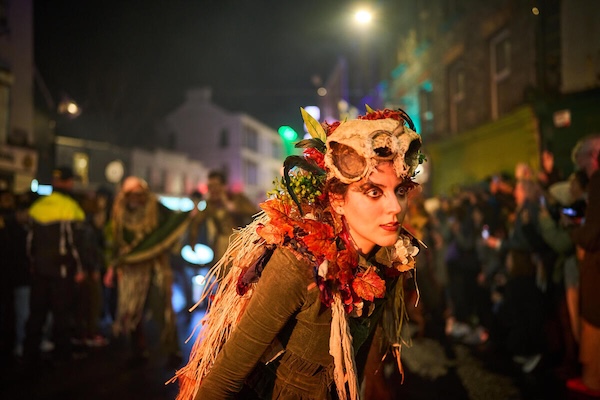
For example, Macnas’ famous Halloween parade in Galway is free to attend, while other towns organize free family activities and Samhain celebrations.
Visit Ireland’s Free Museums
Museums are another excellent way to explore Ireland’s Halloween history without spending much money.
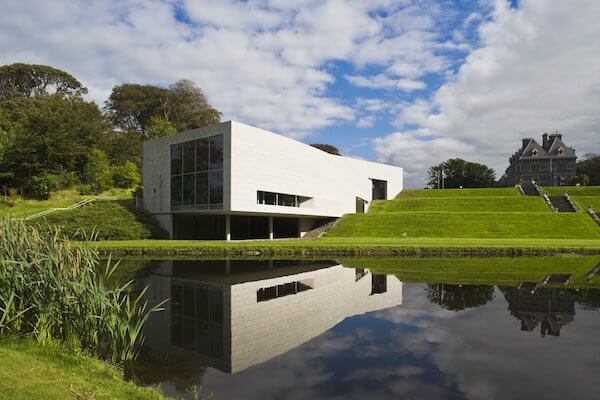
The National Museum of Ireland – Country Life in County Mayo is free to visit and houses Ireland’s National Folklife Collection, including objects connected with traditional customs and everyday life.
The museum is particularly relevant to Halloween because its collection includes traditional Halloween masks and carved “ghost turnips.” Its exhibitions explore Irish customs and traditions, giving visitors a chance to learn about the real history behind many of the Halloween traditions celebrated today.
Explore Ancient Samhain Sites
You don’t necessarily need to pay for an organized Halloween attraction to experience Ireland’s spooky heritage. Some of the country’s most important places associated with Samhain, mythology and the Otherworld can be explored independently.

Sites such as the Hill of Tara and other ancient landscapes in the Boyne Valley provide a fascinating connection to Ireland’s prehistoric and mythological past. Rathcroghan in County Roscommon is another important Samhain landscape.
Just remember that some archaeological sites are on private land or have restricted access, so check the relevant visitor information before setting out.
Choose Your Paid Experiences Carefully
If you do want to spend money on a Halloween attraction, choose one or two experiences that are particularly meaningful to you rather than trying to fit everything into your itinerary.
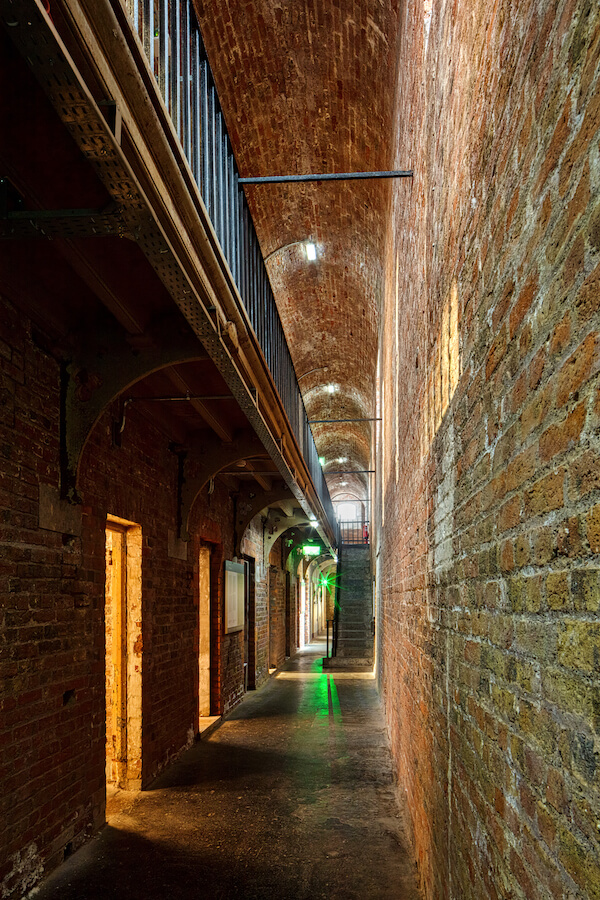
For example, you might choose a guided experience at Rathcroghan if you’re fascinated by the ancient origins of Samhain, or a spooky historical experience such as Haunted Spike at Spike Island in Cork if you’re looking for something more atmospheric.
You can then fill the rest of your Halloween itinerary with free events, museums, historic sites and outdoor activities.
Travel in Ireland on a Budget at Halloween
Halloween falls during Ireland’s October school midterm break, so popular family attractions and accommodation can be busy during the final week of October. If your dates are flexible, consider visiting earlier in October, when you can still experience the autumn atmosphere without necessarily planning your entire trip around Halloween week.
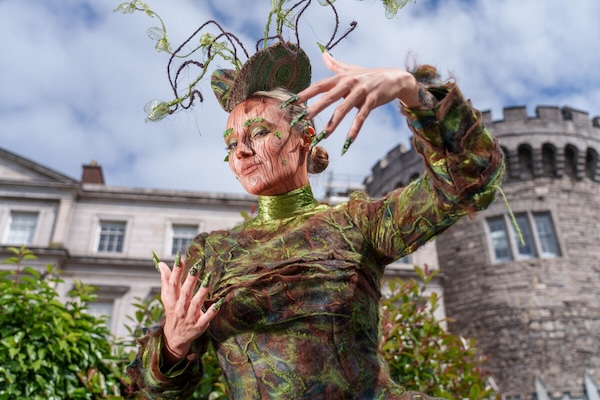
And remember that you don’t have to stay in Dublin to experience Halloween in Ireland.
Some of the most interesting Samhain-related experiences take place in counties such as Meath, Roscommon, Westmeath and Mayo. Staying outside the major tourist centers can also give you more accommodation choices and allow you to explore some of Ireland’s lesser-known Halloween destinations.
Search for Accommodation in County Meath
Frequently Asked Questions
Did Halloween originate in Ireland?
Halloween has its roots in the ancient Gaelic festival of Samhain, which was celebrated in Ireland and other parts of the Celtic world.
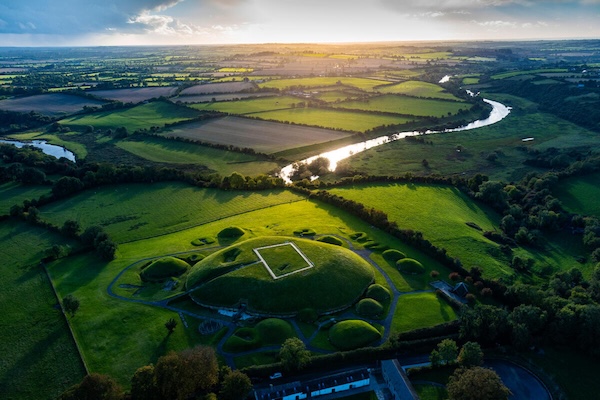
The Boyne Valley in County Meath and Rathcroghan in County Roscommon have particularly strong associations with Samhain.
Is Halloween celebrated in Ireland today?
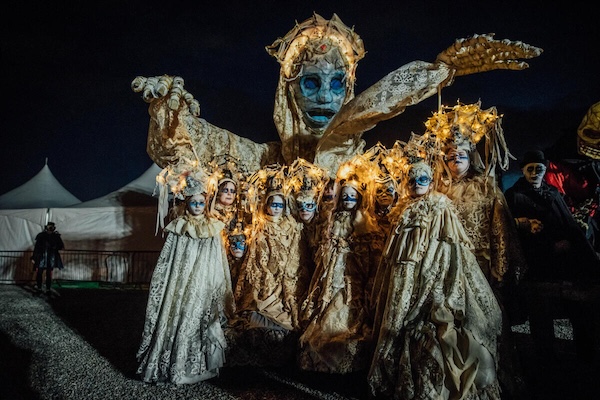
Yes. Halloween is widely celebrated throughout Ireland, with festivals, parades, family events, haunted attractions and traditional Samhain celebrations taking place around the country.
What is Samhain?
Samhain was an ancient Gaelic seasonal festival marking the end of the autumn harvest and the beginning of winter. It was traditionally celebrated around October 31st and November 1st.
When is Halloween celebrated in Ireland?
Halloween is celebrated on October 31st, as it is in many other countries. However, Halloween-related festivals and events in Ireland often begin earlier in October and can continue into the first days of November.
What are some traditional Irish Halloween customs?
Traditional Irish Halloween customs include lighting bonfires, carving turnips into lanterns, playing games, fortune-telling, eating barmbrack and colcannon, guising, storytelling and playing pranks.
Did the Irish carve pumpkins for Halloween?
No. Turnips were traditionally carved into Halloween lanterns in Ireland, rather than pumpkins.
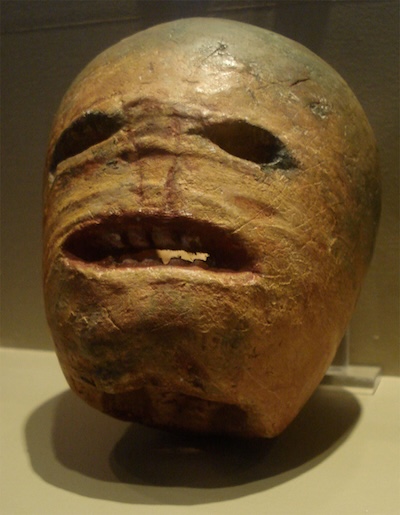
Irish immigrants helped carry the tradition of Halloween lanterns to North America, where pumpkins were eventually adopted because they were larger and easier to carve. This is one reason the pumpkin jack-o’-lantern has become so strongly associated with Halloween today.
Where can I see traditional Irish Halloween masks?
The National Museum of Ireland Country Life in County Mayo has examples of traditional Halloween masks and other objects connected with Irish folk traditions in its collections.
Where are the best places to experience the origins of Halloween in Ireland?
Two of the most significant destinations are the Boyne Valley (Newgrange) in County Meath and Rathcroghan in County Roscommon.
What are the best Halloween festivals in Ireland?
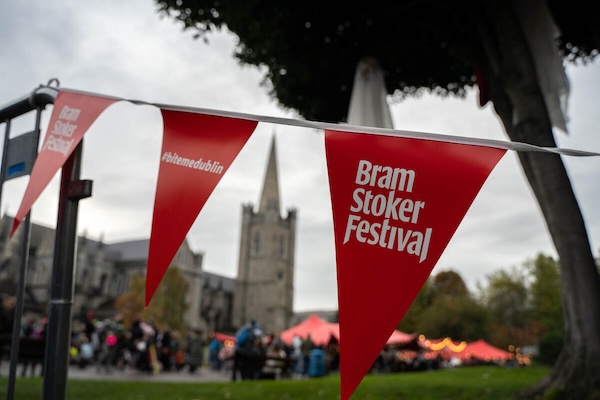
Some of the best-known Halloween celebrations include the Púca Festival in County Meath, the Derry Halloween Festival in Northern Ireland, the Bram Stoker Festival in Dublin and Macnas Halloween events in Galway.
Is Halloween in Ireland good for families?
Absolutely. Ireland has plenty of family-friendly Halloween events, including pumpkin experiences, Halloween trails, storytelling events, parades, workshops, and community celebrations.
Can I visit Ireland for Halloween while on a budget?
Yes. You don’t need to spend a lot of money to enjoy Halloween in Ireland. Many towns host free parades, outdoor events and community celebrations, while Ireland’s national museums are free to visit.
If you’re planning a trip to Ireland in October, consider going beyond the typical tourist attractions. Follow the stories, seek out the old traditions and experience Halloween where some of its earliest roots can still be found.
Are you planning to experience Halloween in Ireland? Let me know in the comments below.
